
Breakfast with Methuselah, part 2
On April 13, 2010 by Liz TagamiThe day was bright, but cool, and walking into the shade of this old stand of dark and silver-leafed olive trees was downright chilly. Those of us who arrived early sat on tuffets and chatted while we sipped legmi, a sweet and light drink of fresh palm sap, and waited for our colleagues to arrive by foot or SUV from the wide unpaved path between great blocks of olive trees, about two miles from the main road.
My tuffet was set against the trunk of one of the trees and faced my friends. Together, we had a view of the road to the left and of the Bedouin tent before us which had been pitched in our honor. Two men baked al-malla bread in the sandy hot white ash and waited with us. To our right, a worker rode languidly by, bareback, on a small and thin white horse with a delicate face. It was very peaceful.
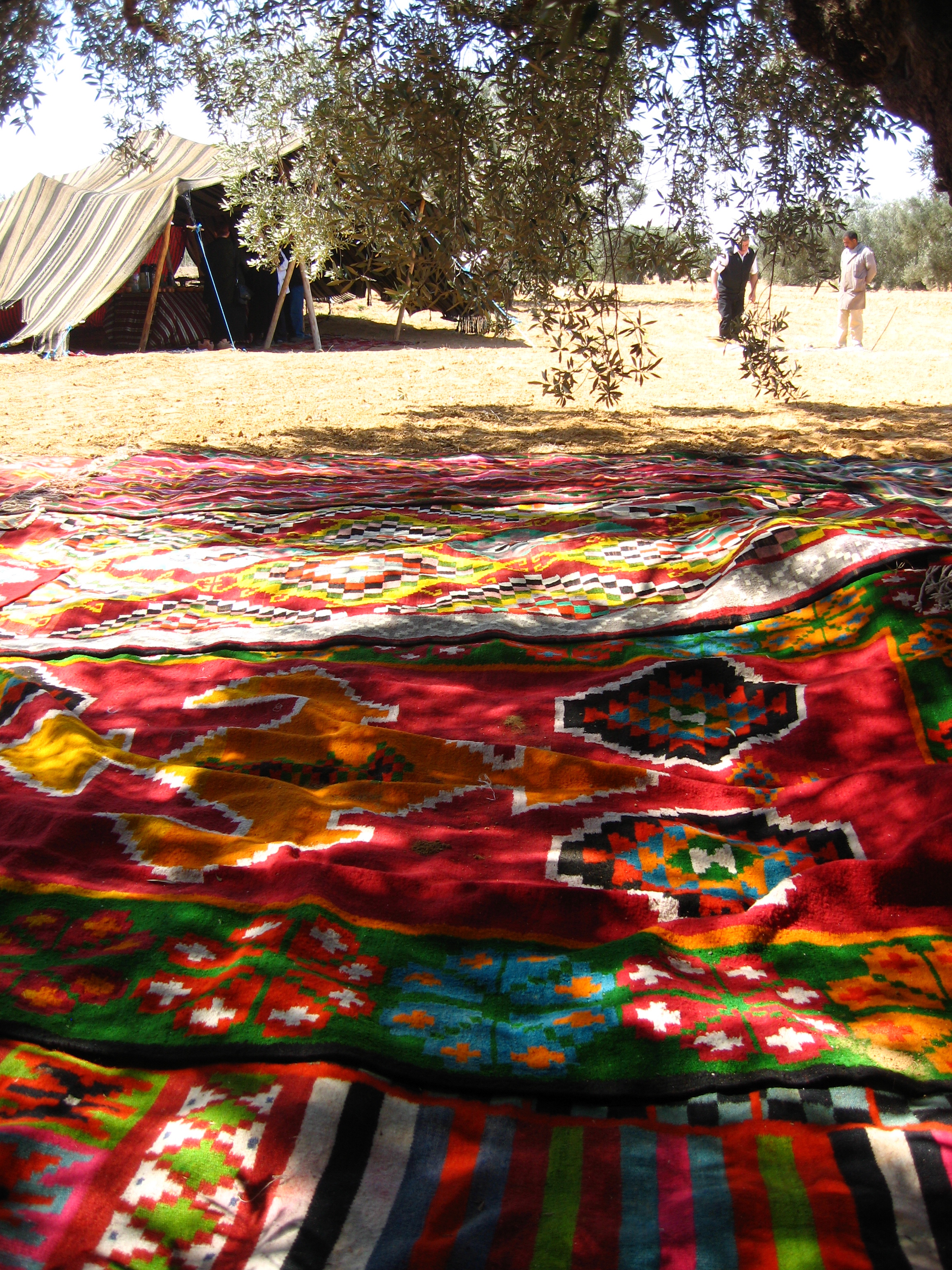
Berber Tent and al-malla bakers as seen through the olive branches (Photo: Tagami)
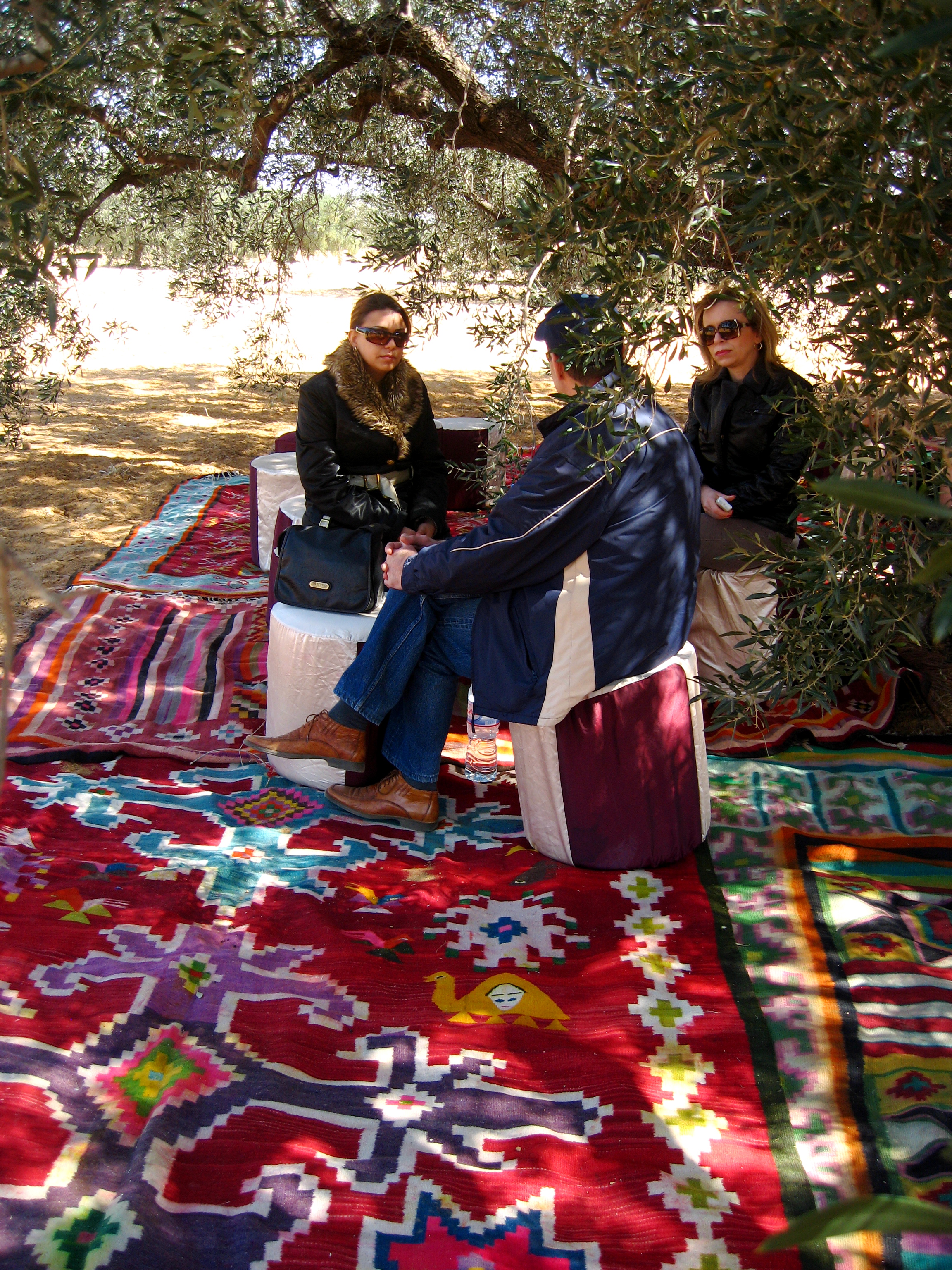
Tuffet-bound friends upon Berber carpets, huddle in the chill under an olive tree. (Photo: Tagami)
If you have Google Earth on your computer, I encourage you to open it and type in Sfax, Tunisia. There is an umber-colored wedge of land in central Tunisia from Sfax to Monastir to the north along the coast and then Kasserine to the west. Lower yourself to about 5 km above the planet where you will detect many neatly spaced dark green dots in the earth. Chemlali olive trees. A lot of them. The chemlali olive varietal makes up 60% of all olives currently cultivated in Tunisia, so there are estimated to be nearly 39 million of them. The farm we’re visiting started with only 300 trees in 1911, and today we are surrounded by 12,000 mature chemlali. Slim, the farmer who owns this land, along with many other growers in Tunisia are still putting in new trees because the demand for 100% Tunisian olive oil is increasing.
Some of the trees, such as the ones started by Slim’s father and grandfather, are decades old. Others here are quite ancient, having existed in this place long before the Arabs, Berbers, Turks and French.
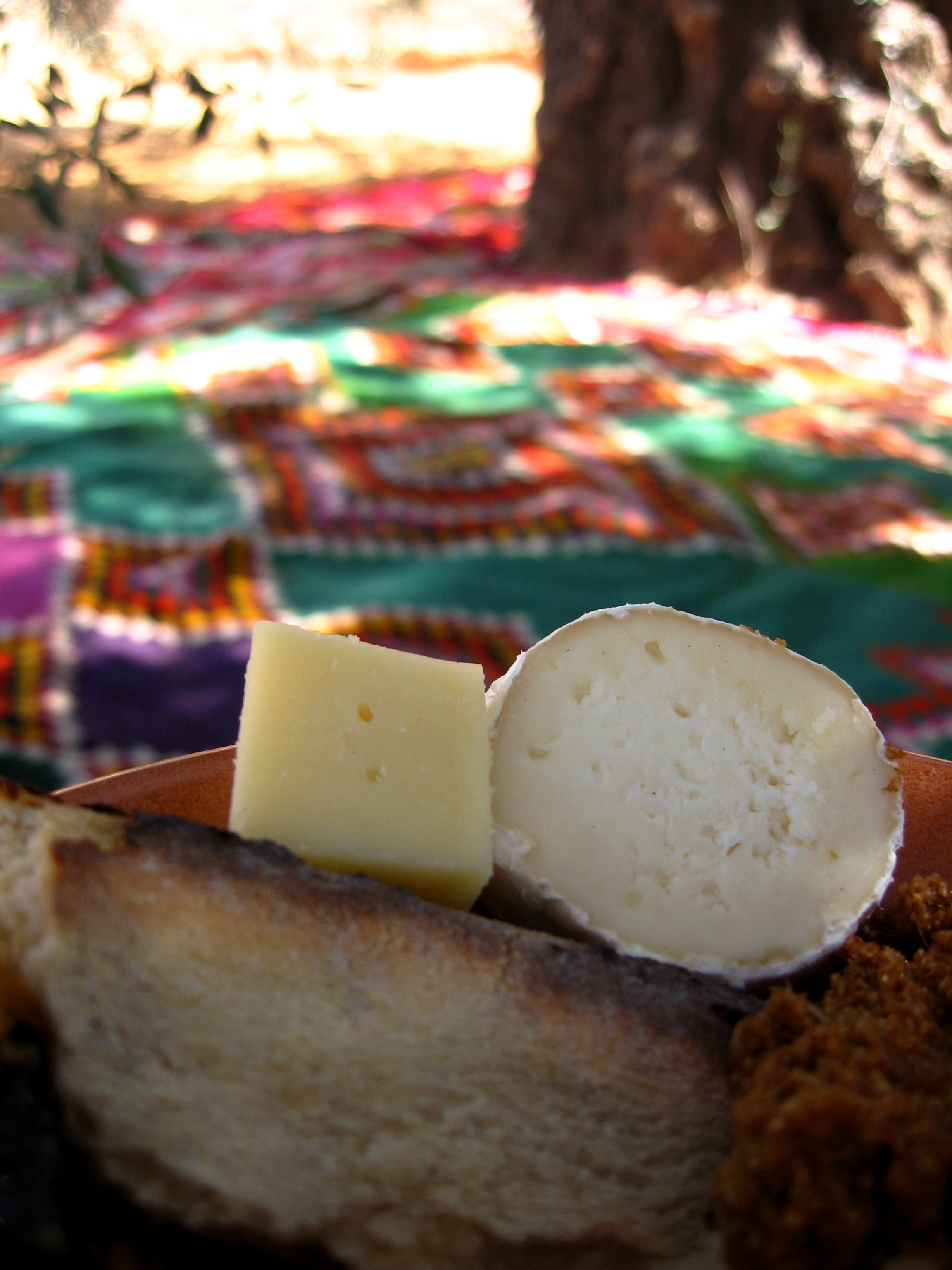
Fresh local cheese and al-malla bread (Photo: Tagami)
Our reverie was soon broken as the other guests arrived and the breakfast soirée began. We piled malla and cheese, olives and dates onto our plates and were of good cheer. Slim organized a pruning demonstration and we watched from beneath the tree.
What about Methuselah?
The original Methuselah was Noah’s grandfather who purportedly lived to be 969, however this one — she who was our companion at breakfast — was even older than he, and was with us the whole time we waited for and then dined with our friends.
In many ways the gathering was as much a celebration of her as it was a greeting for us, as the stand of trees under which we sojourned was not a stand at all, but a single massive tree. The tree trunks around us were not trunks, but branches, thick and gnarled with age. Time had swept dust and sand past the trunk and up beyond to the tree’s six mighty arms, each one as thick around as four men.
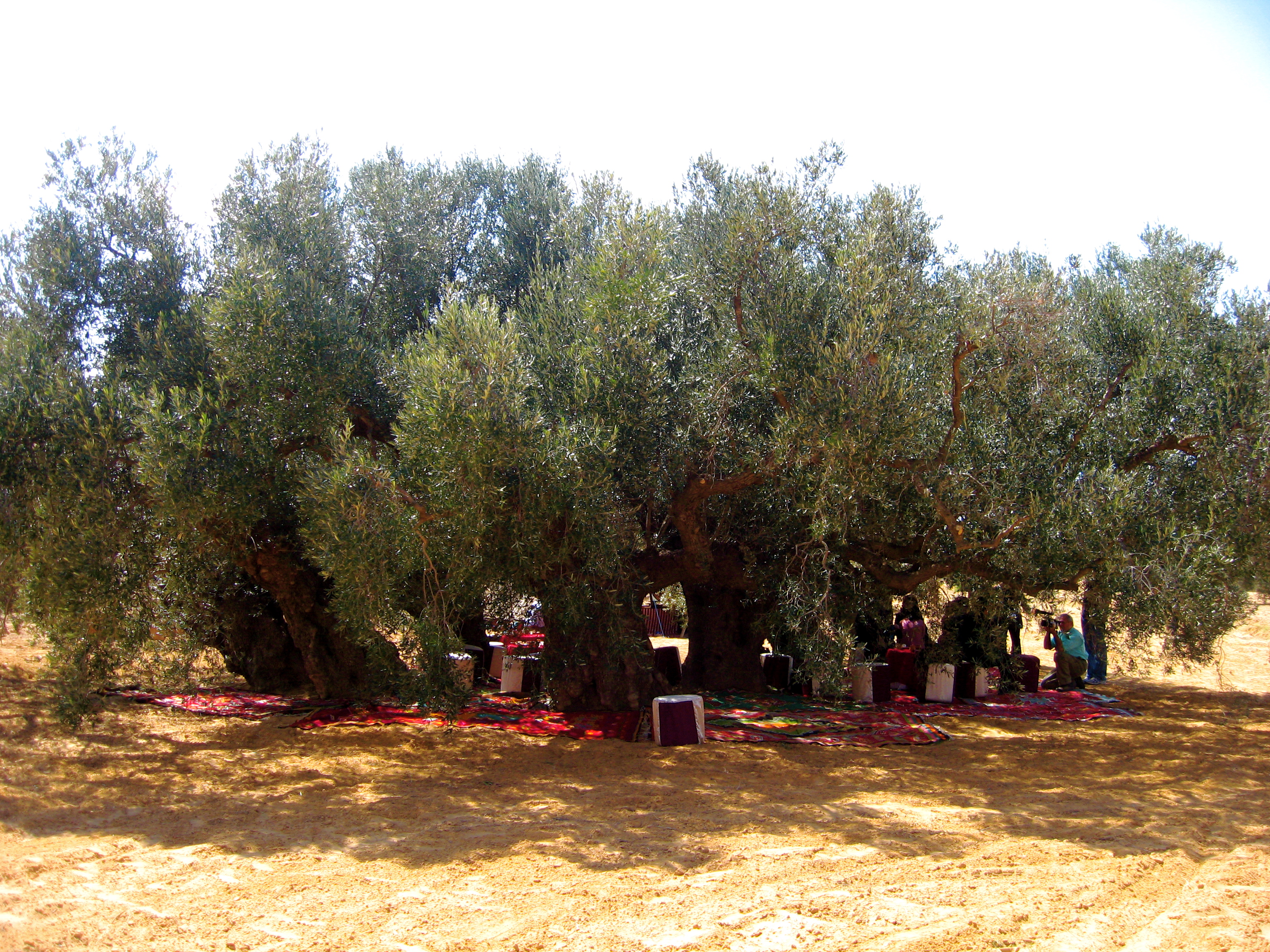
A single ancient olive tree, trunk buried in centuries of sand, stands sentinel over our Bedouin breakfast. (Photo: Tagami)
Still she gave shade and bore fruit each season as she had for over 1,200 years. She does not have a name, but that morning, with our feet grounded in the soil around her, we enjoyed fresh air, good food and companionship in her presence. It was but a fleeting moment in her long and productive life, and a life-long memory for all of us.
_____________________________________
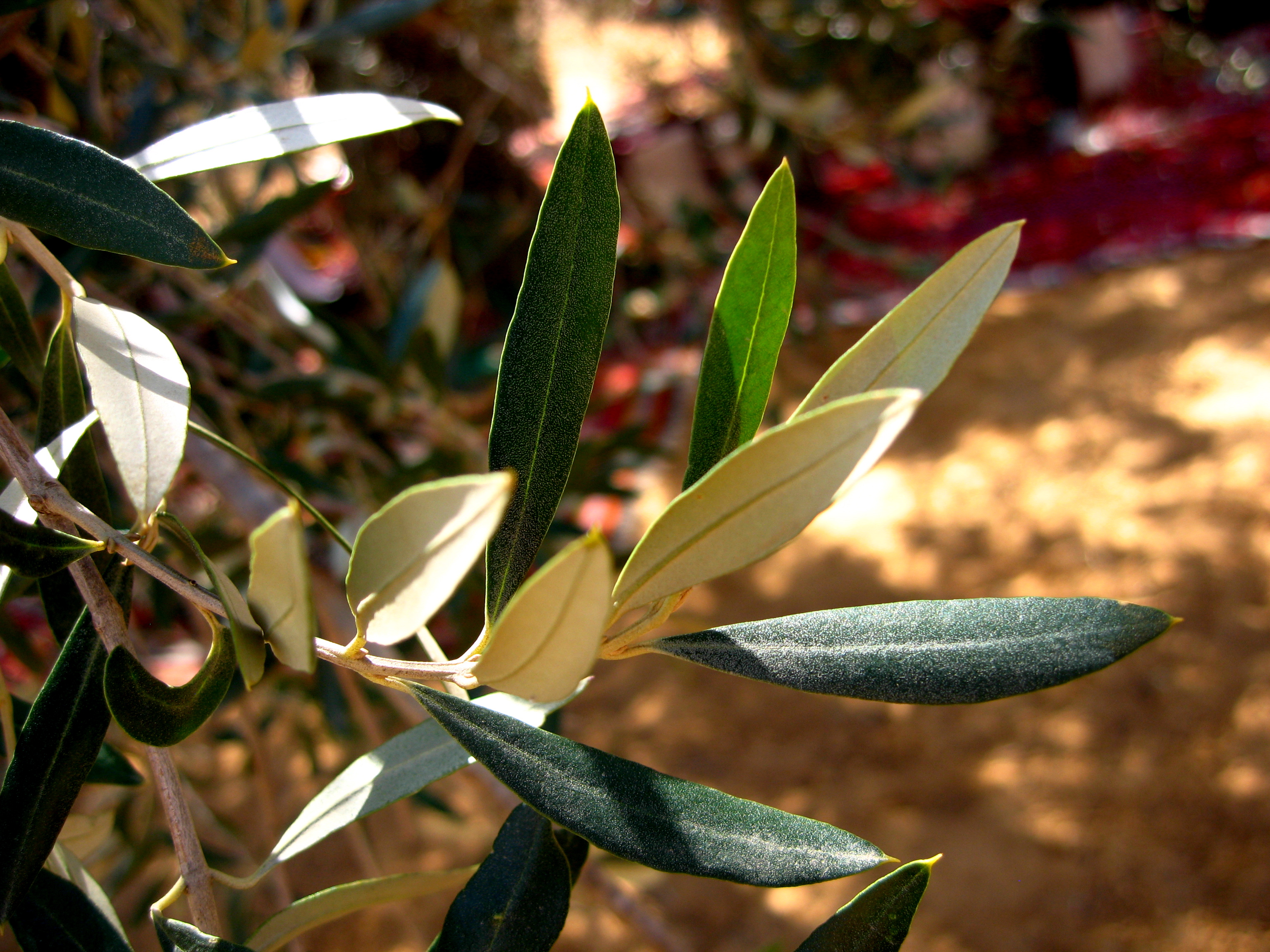
Ancient Olive Tree, detail. (Photo: Tagami)
Upcoming posts: Ancient Olive Trees, Modern Milling Methods, El Jem Colosseum, The Souq, Alimentaria Barcelona, Tuscan Olive Oil, Chianti Rufina, Agriturismo, Florentine New Year, the Mezzadria, Oil China Shanghai 2010, and more! Won’t you consider subscribing?


Great photos under a very old tree….now you’ve started something…..the search for the oldest olive trees in the Mediterranian. You’ll be in Sardina and Lebanon soon enough.
Liz-
Your storytelling is mesmerizing- I can feel the breeze, smell the trees and taste the cheese!
The beautiful photography brilliantly enhances your vibrant descriptions.
Many thanks for sharing your adventures with such great passion. Truly a pleasure to read.
Anxious for the next chapter!
Sheila
Well done! Your photos and writing really evoke the place.
Very moving account of your experience. This reader felt that she was there. I could taste the bread and cheese, and sense the presence of the ancient tree (if it could talk). Just lovely.