
The Industrial Side of Olive Oil
On April 17, 2010 by Liz TagamiAfter a morning in the orchards we drove to the other side of Sfax to visit a very large producer. The filling lines were running and we observed both 500 ml bottles and 3 liter tins being filled and packed for shipping. This was a complete inline system with auto-cartoners, bottle-inverter/air rinse system, a rotary overflow filler, ROPP capper, and pressure sensitive label application.
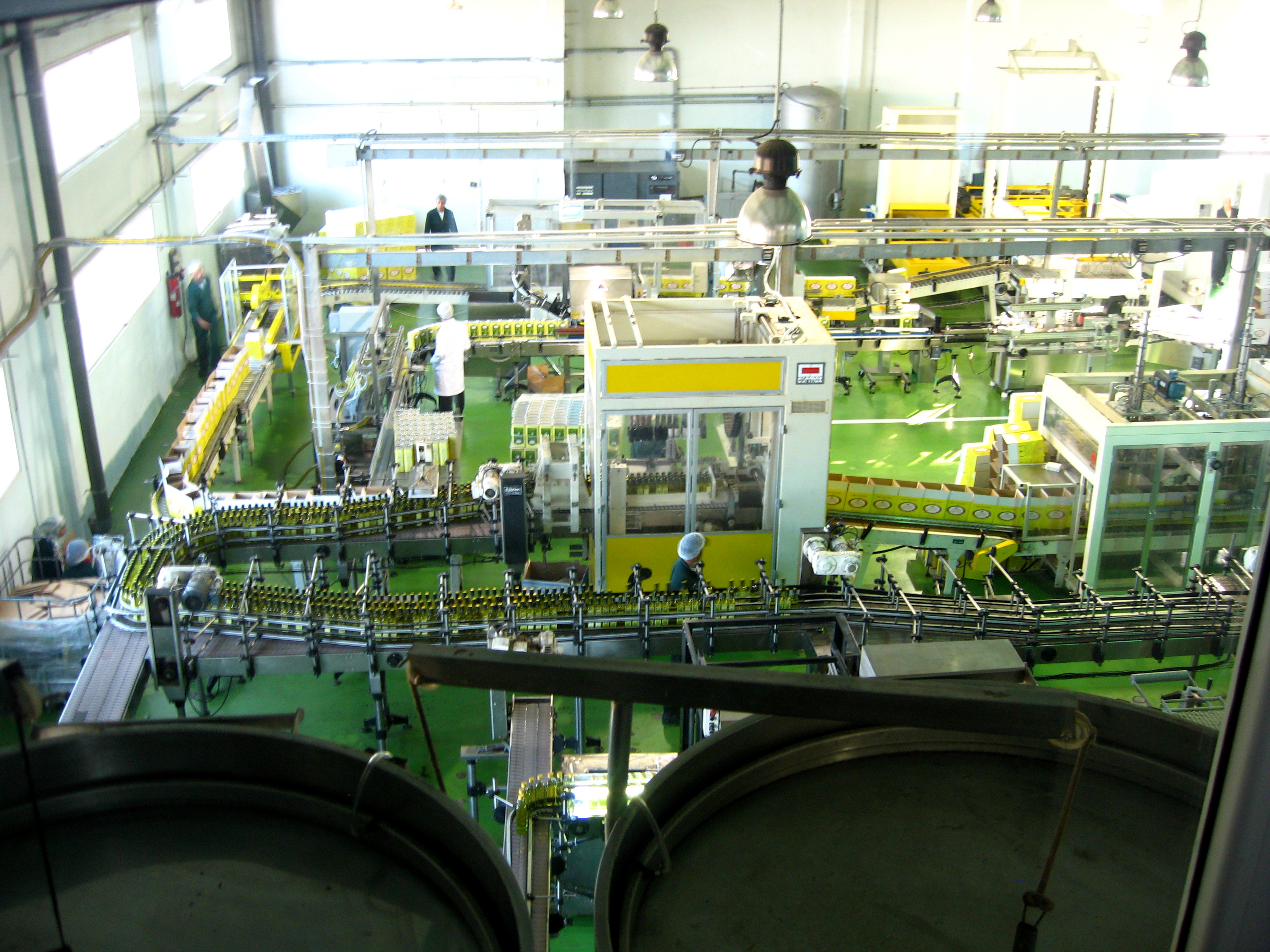
Automated bottling system. Sfax, Tunisia (Photo: Tagami)
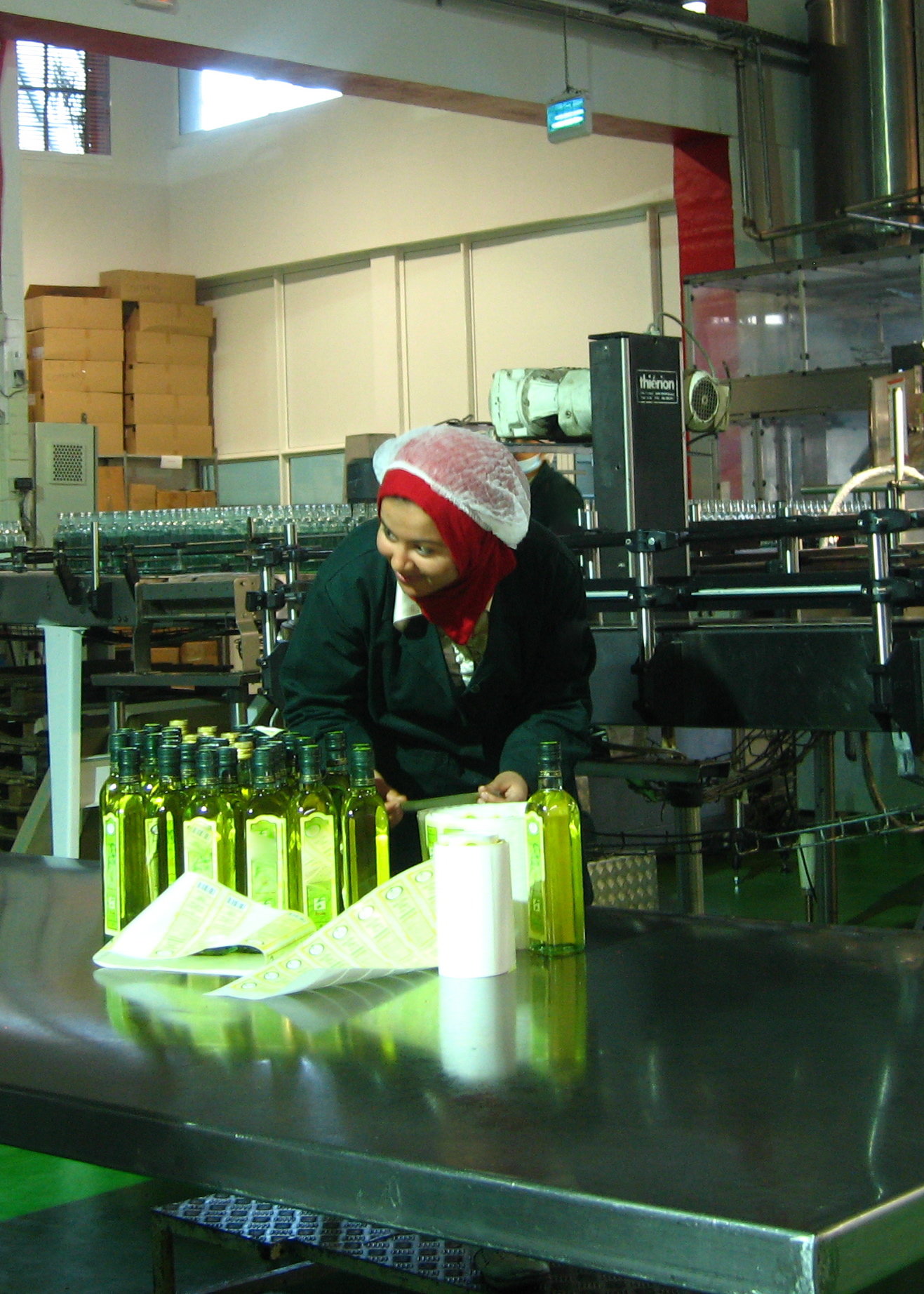
Worker checks quality of label application (Photo: Tagami)
We spent time in the lab where a chemist demonstrated some of the tests she performs to determine if an olive oil meets International Olive Council (IOC) standards for the grade “extra virgin”. It is easy for marketing people to get hung up on the metrics, and we frequently see articles in the press about an oil being “acidic”. More accurately, what chemists are looking for is something referred to as “free acidity” expressed as oleic acid. Different governing bodies have different standards. A very clear description these standards can be found here.
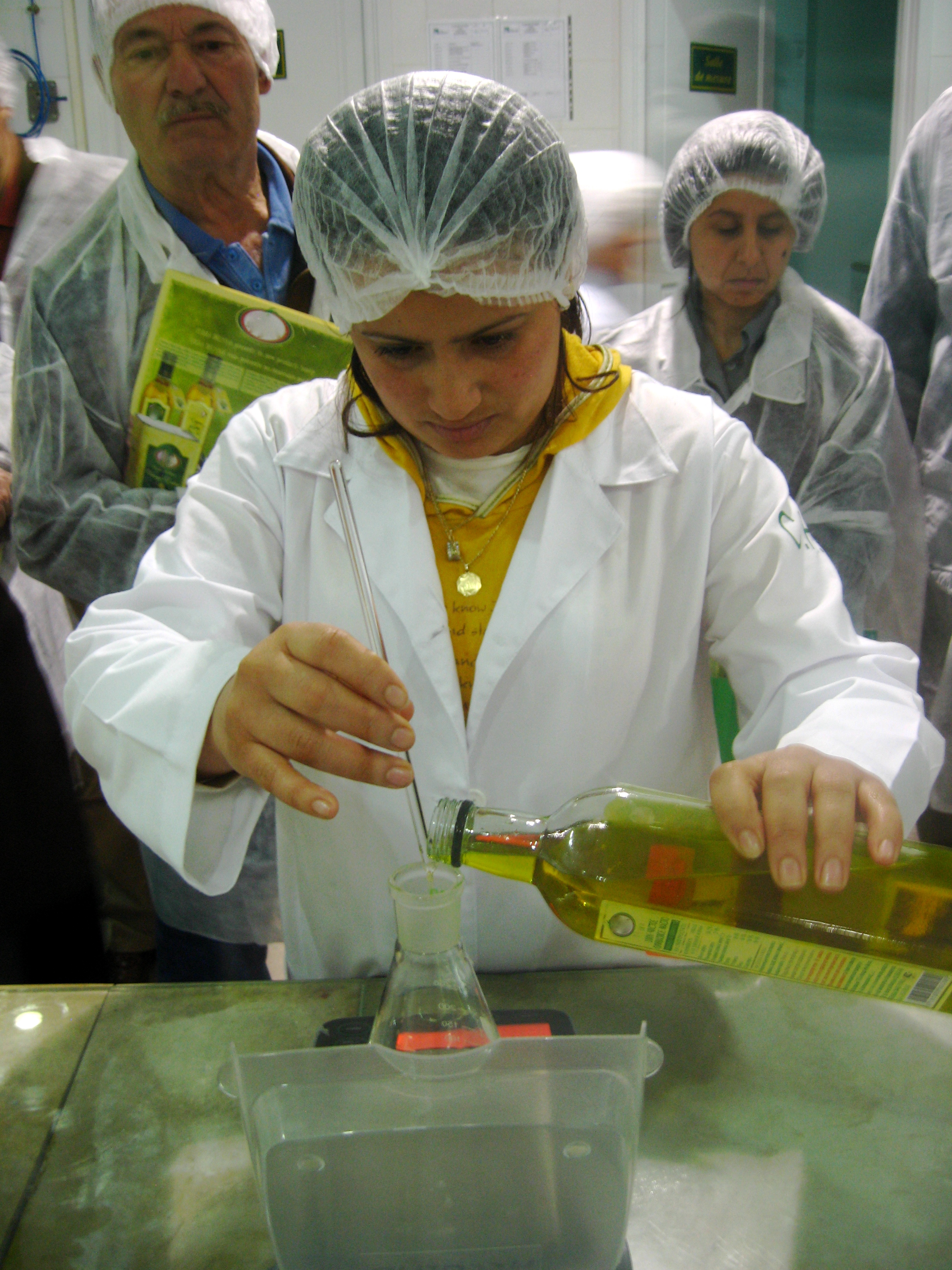
Chemist demonstrates some of the tests required for EVOOs (Photo: Tagami)

Olive Oil Tasting Glasses and Tasting Guide (Photo: Tagami)
Additionally, the company we visited maintains a tasting panel to judge the organoleptic characteristics of an oil: they identify faults — such as musty, fusty, rancid — and look for a harmonious balance of three positive attributes. To be certified as an extra virgin olive oil the product must not only pass the chemical analysis, but must be free of defects and demonstrate characteristics of fruity, pungent and bitter. To learn more, see Nancy Ash’s Tasting Advice, which conveys the system and methods of a professional olive oil taster in a friendly and accessible way, and Richard Gawel’s tasting resources, which provide many insights and considerations.
Both conventional and organic EVOO are produced here, and we were also able to see an olive oil refinery for the production of what is known in the marketplace as “pure olive oil”. If an olive oil has defects — perhaps the olives were not able to be milled immediately — they would not pass the chemical analysis or the rigors of the taste panel. These oils are refined with heat and chemicals to remove all aroma and flavor, and unfortunately all of the nutrients, too. The result of this refined olive oil is called “pure” olive oil, sometimes marketed as light or “lite”, and is a very large percentage of what is produced and consumed worldwide.
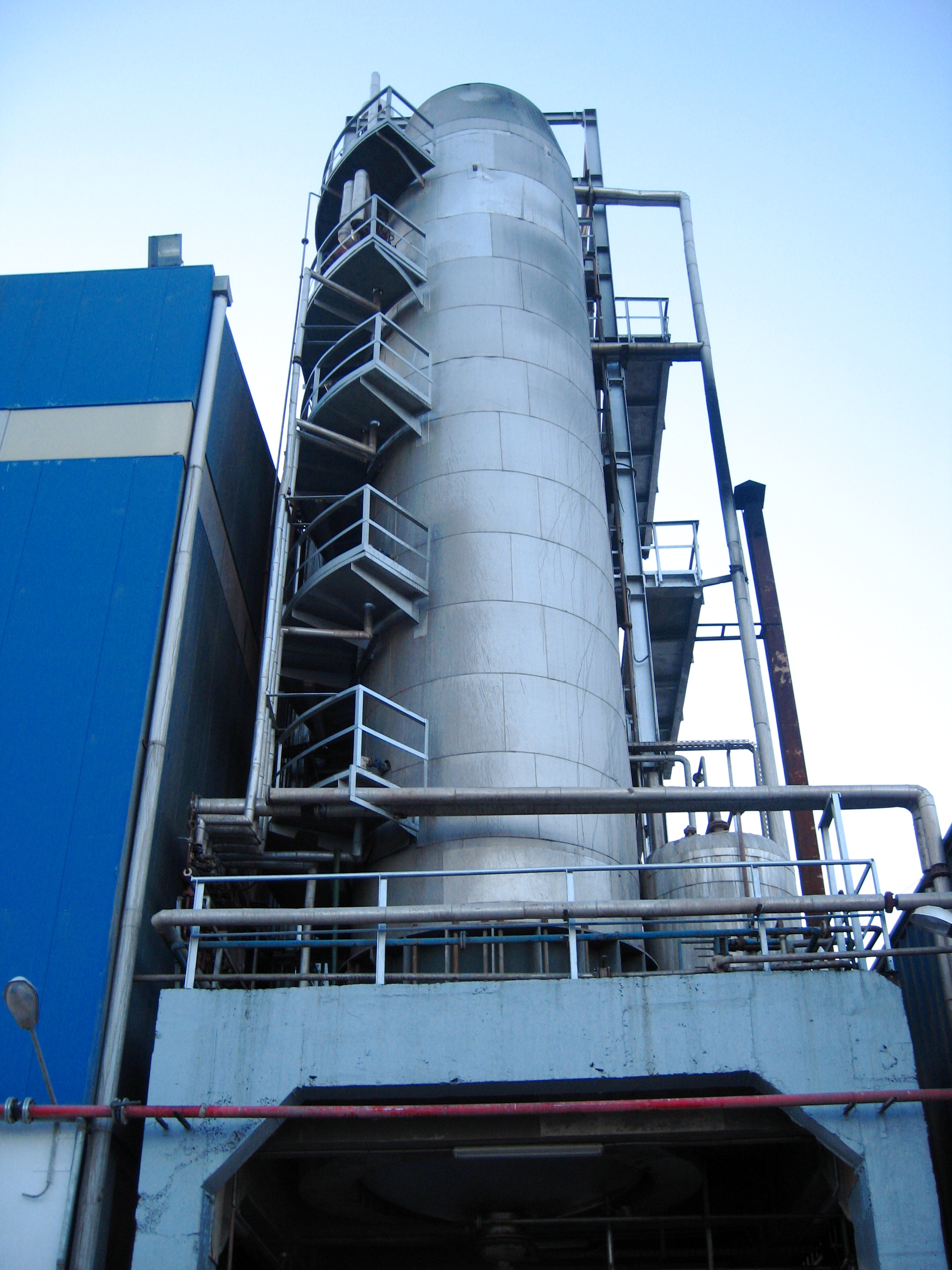
Refinery to produce "pure Olive Oil" (Photo: Tagami)


Great blog and beautiful photos! It was almost like being on the tour itself.
Tagami -san…what is “fusty”?????
Another great post, Liz. Have fun in China!
Hi Gail-san,
Thanks for your question on the meaning of “fusty”. I’ll briefly describe all three of the defects that I mentioned in the article. These are only a few of the faults that professional tasters screen for when grading olive oils.
Fusty: flavor that comes from olives which have begun to ferment if held too long before pressing.
Musty: the next stage beyond fermentation when the olives have begun to become moldy before pressing
It doesn’t take long for fermentation (fusty) and mold (musty) to happen. A pile of fresh olives is basically a compost pile. That’s why modern millers pride themselves of the ability to process fruit into oil quickly and completely avoid this issue. It is also why all equipment and storage vessels must be kept absolutely clean as it doesn’t take much old oil to ruin an entire new batch.
Rancid: this is a fault that happens after milling, not before, and can happen to even the best oils with exposure to air or merely due to age. It is the flavor that all oils will eventually devolves into, and is why good growers always print both the harvest date and the best if used by (BIUB) date on their products. It’s best to consume your oil 12-18 months after harvest before they oxidize and go rancid. One last note: the higher the polyphenol count (referring to antioxidants), the longer the shelf life of your oil. Polyphenols protect the oil from oxidizing and growing old — just as they help people from oxidizing and growing old, too! EVOOs that have a more peppery, pungent character exhibit a higher polyphenol level, and may last 24 months or more.
Thanks for being a reader. I hope you can get some good EVOO where you are in Mexico.
Tagami
Elizabeth, this is very interesting. I am intrigued, and learning alot from your essays. Thank you!
Very interesting post.
I don’t like to think of food as an industrial product though.
I will have to check Nancy Ash Tasting Advice
I am used to wine tastings even though I don’t have a technical (scientific) approach to them.
I would be interested in sitting in olive oil tasting sessions. If you know of any in New York area organized by producers let me know.
Serge
‘The French Guy from New Jersey’
http://www.sergetheconcierge.com
Twitter: @theconcierge
Facebook: sergetheconcierge