
The Souks of the Tunis Medina
On May 1, 2010 by Liz TagamiThe Saturday after our olive oil trade mission I stayed in Tunis an extra day to visit the medina and walk among the ancient souks, but first we joined the crowds in the surging heart of the modern city and walked west along the main thoroughfare, Avenue Habib Bourguiba, often called the “Champs Élysées” or “Fifth Avenue” of Tunis. We started in the wide tree-lined promenade between generous boulevards on either side, then crossed back and forth to the National Theater, the Cathédrale Saint Vincent de Paul, the French Embassy, shops, and a bistro café — the French influence everywhere was quite strong.
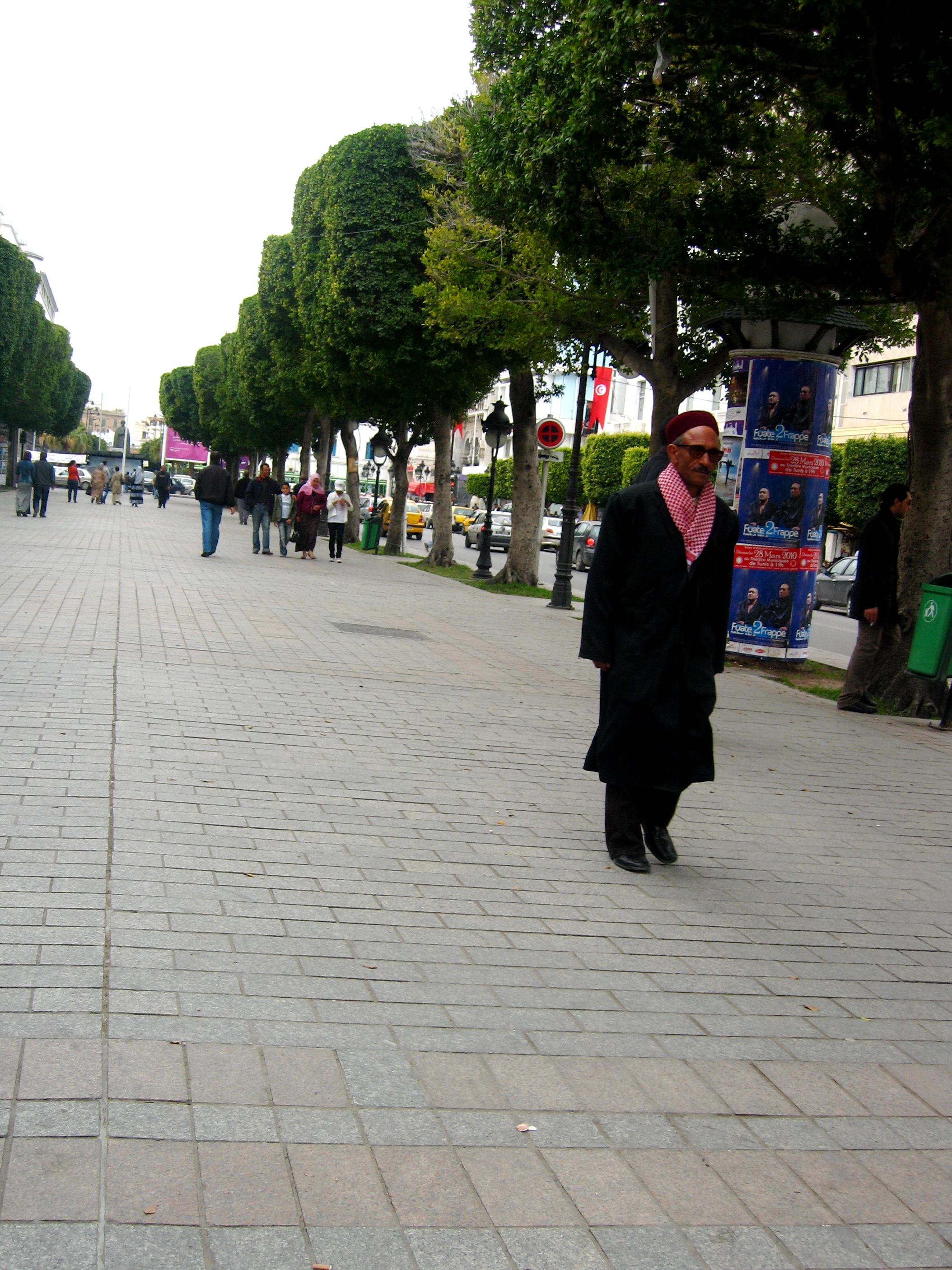
Avenue Habib Bourguiba Promenade. (Photo: Tagami)
After a bracing sidewalk espresso we continued westward to the tall and stately Sea Gate — the Bab el Bahr formerly known as the Porte de France — which led into a small plaza, then a warren of narrow paths lined with merchants at street level and apartments above.
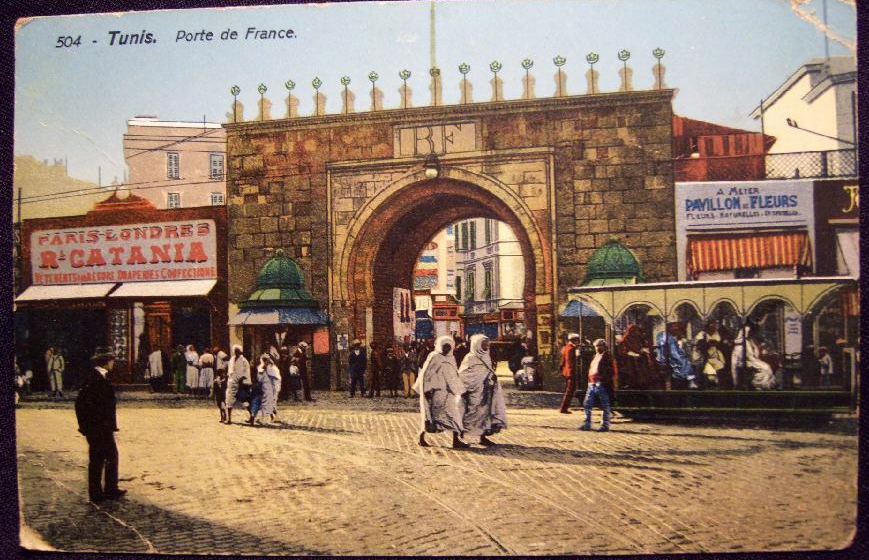
Tunis, Porte de France (Image: Vintage Postcard)
I’ve always known Medina as the city in Saudi Arabia which is the second most holy city in Islam, but a medina quarter is one of 27 ancient town centers in various historic cities across North Africa. It is typically walled and characterized by narrow maze-like streets and covered passages, two features which were incorporated by their 9th century Arab builders to repel, then confuse and slow down invaders. The Tunis medina is an UNESCO World Heritage site. From the 12th to the 16th centuries Tunis was considered one of the greatest and wealthiest cities of the Islamic world. Today, 700 monuments, palaces, mosques, mausoleums, madrassas and fountains document this tremendous past.
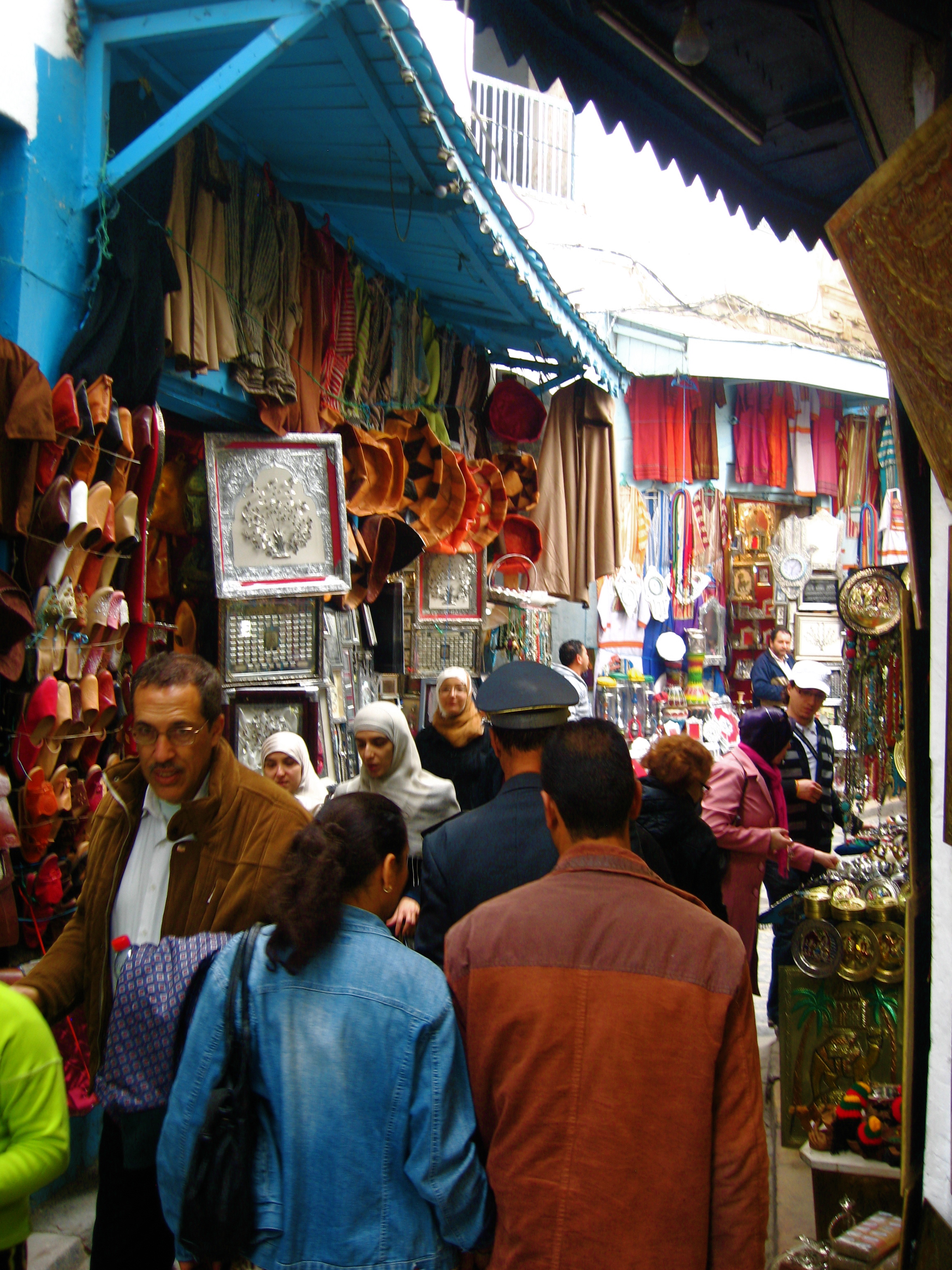
Shopping in the souks of Tunis. (Photo: Tagami)
The streets are sometimes only a few feet wide and built to a walking pace; not even motorcycles or bicycles are found here. For deliveries we saw push carts or bundles conveyed by hand.
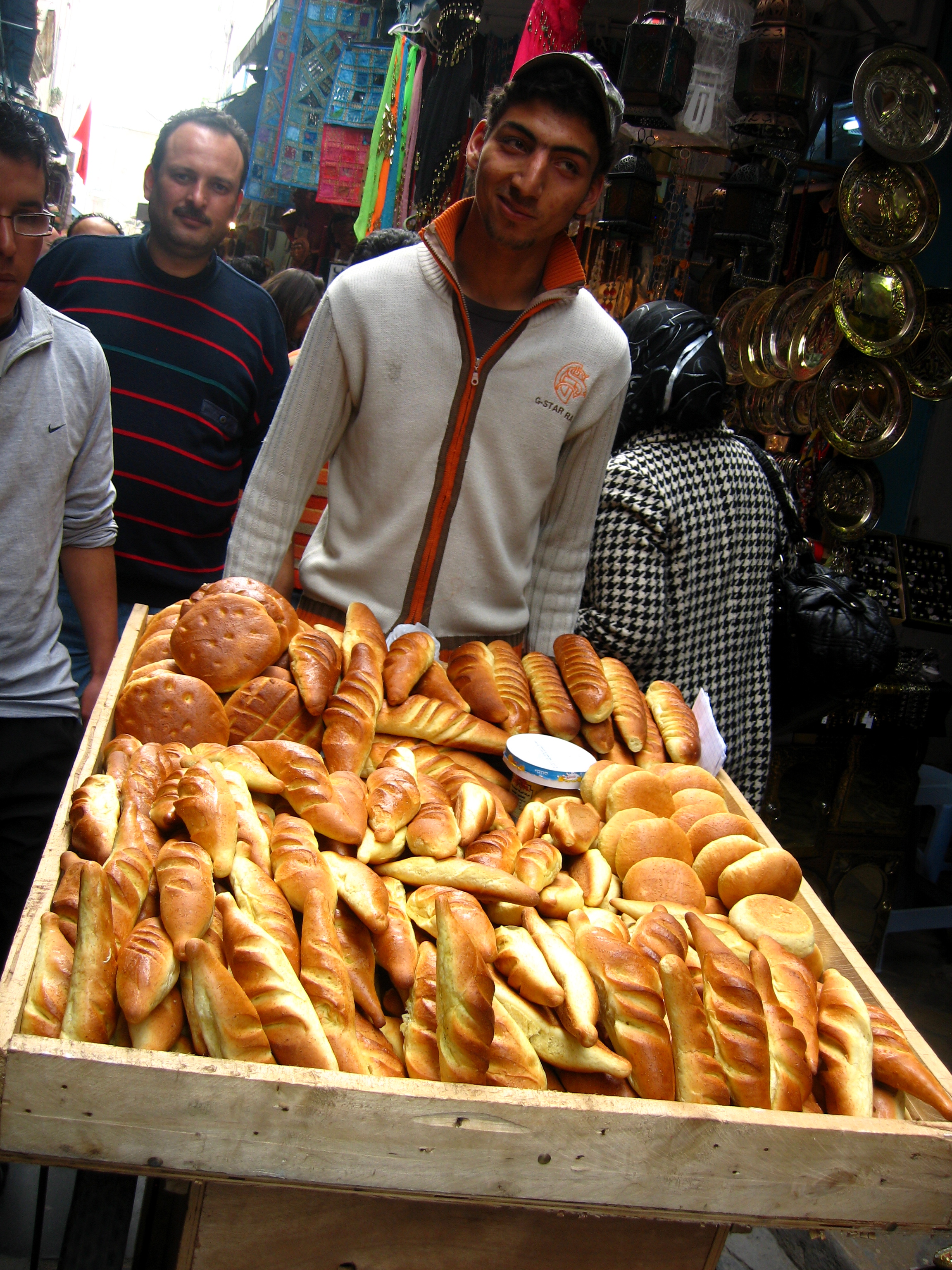
Delivering fresh bread, Tunis medina. (Photo: Tagami)
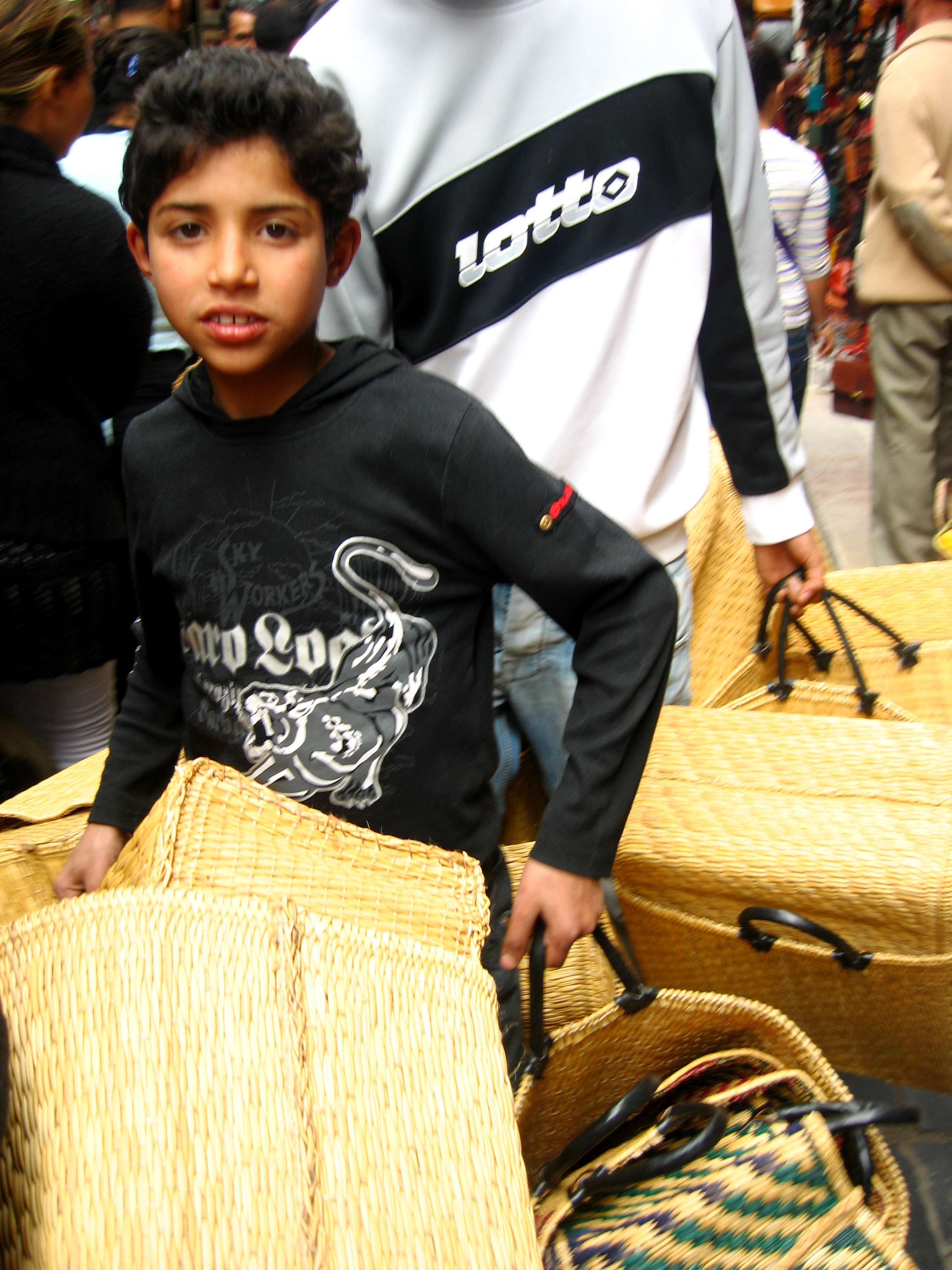
Boy delivers woven goods in Tunis medina. (Photo: Tagami)
Although today we see foot traffic almost exclusively, in ancient times horses and camels would be ridden within the medina. Doors leading from the street into private courtyards sometimes include two sets of rings to open them: one set placed at a standing height, and one set which could be reached from horse or camel back, as seen in the photo below.
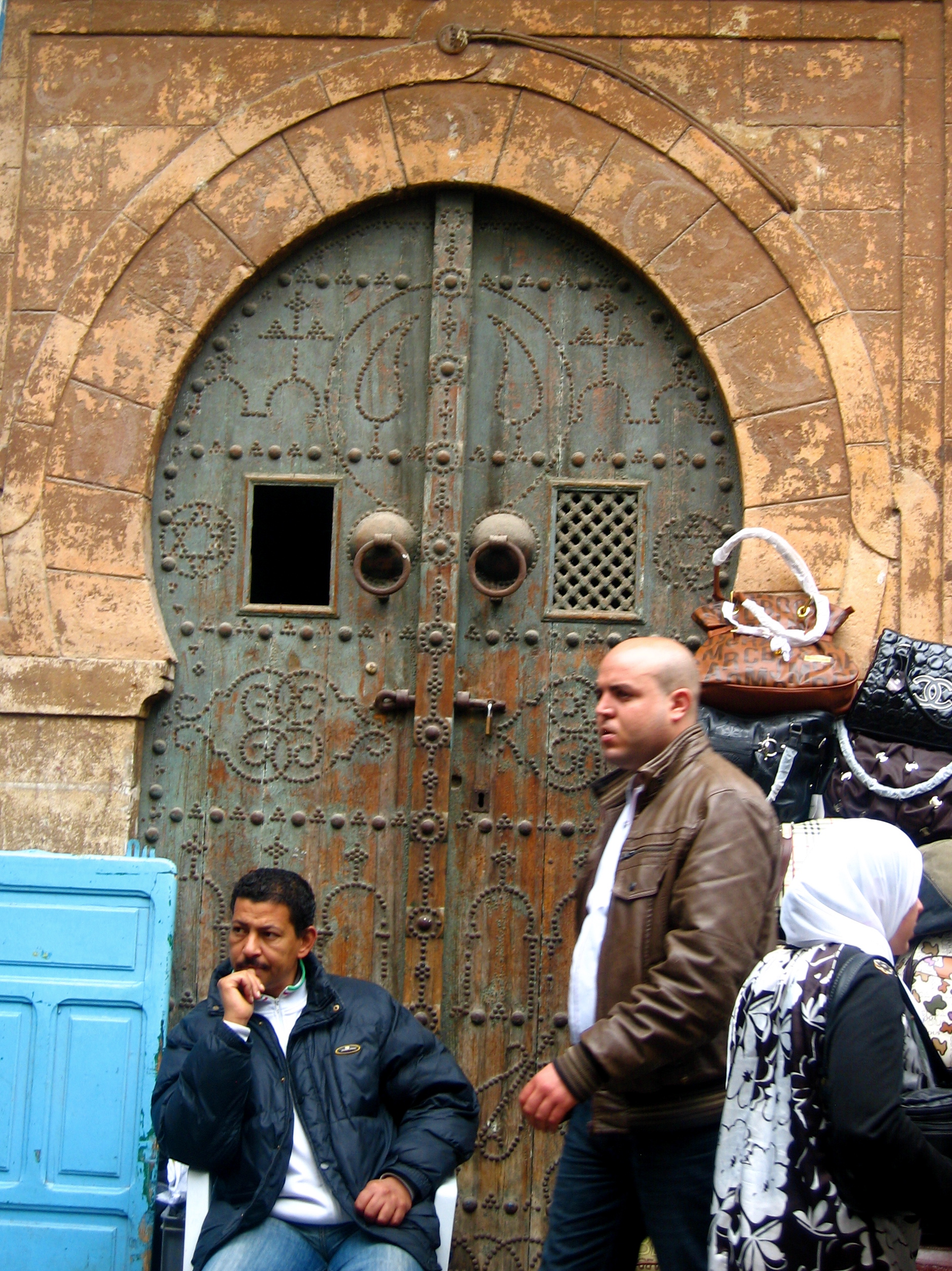
Door built for horsemen, Tunis medina. (Photo: Tagami)
The paths within the Tunis medina, perhaps wide enough for four or five people abreast, are a network of covered streets lined with trader and artisan shops generally organized by specialty with each merchandise type forming its own souk, or market. Clothing merchants, perfumers, fruit and grain sellers, booksellers and wool merchants have goods to sell here, and it was only afterwards when fact-checking this story that I realized that we had walked through 13 separate markets.
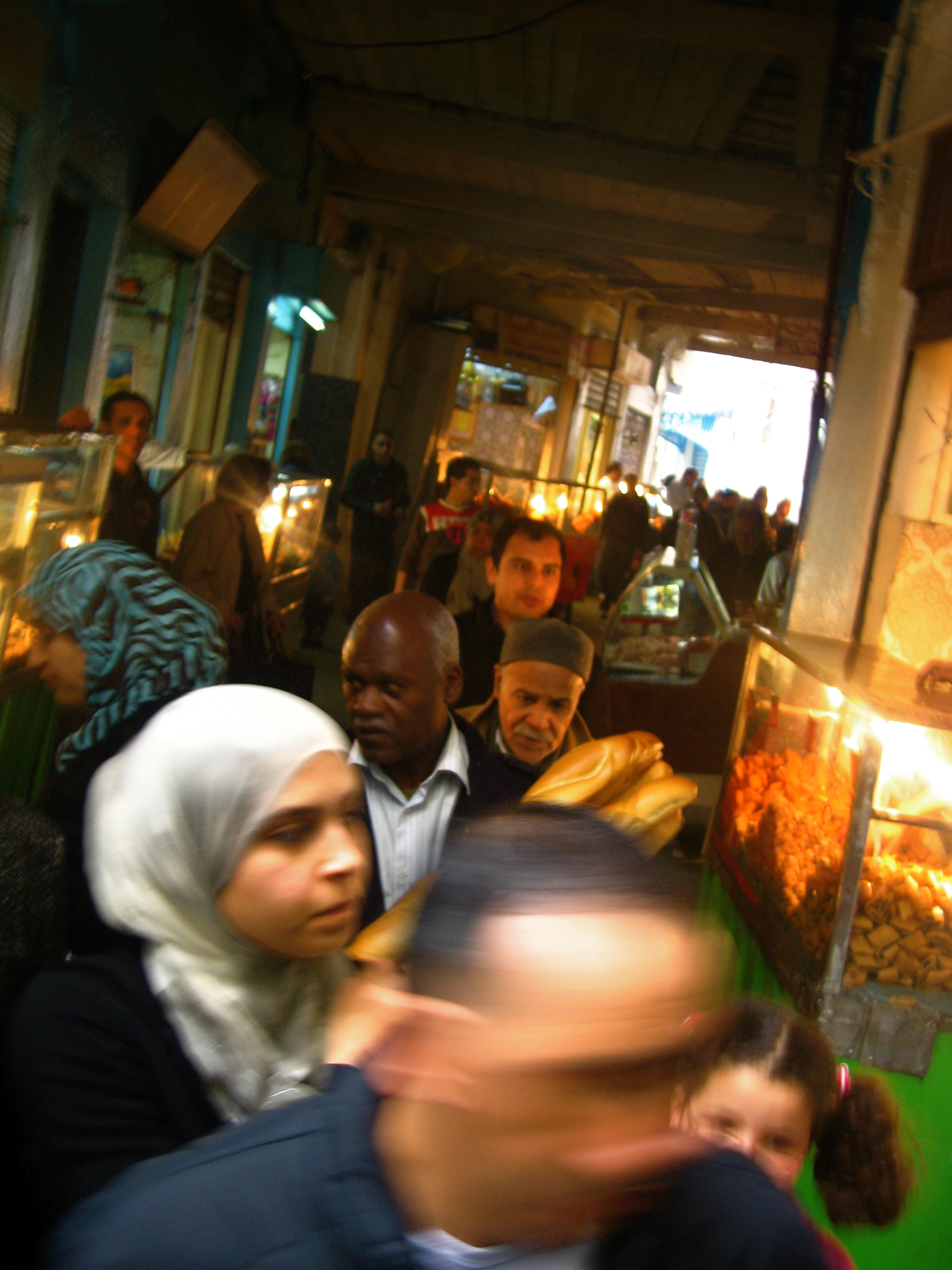
Shoppers file past pastry cases of local sweets, Tunis. (Photo: Tagami)
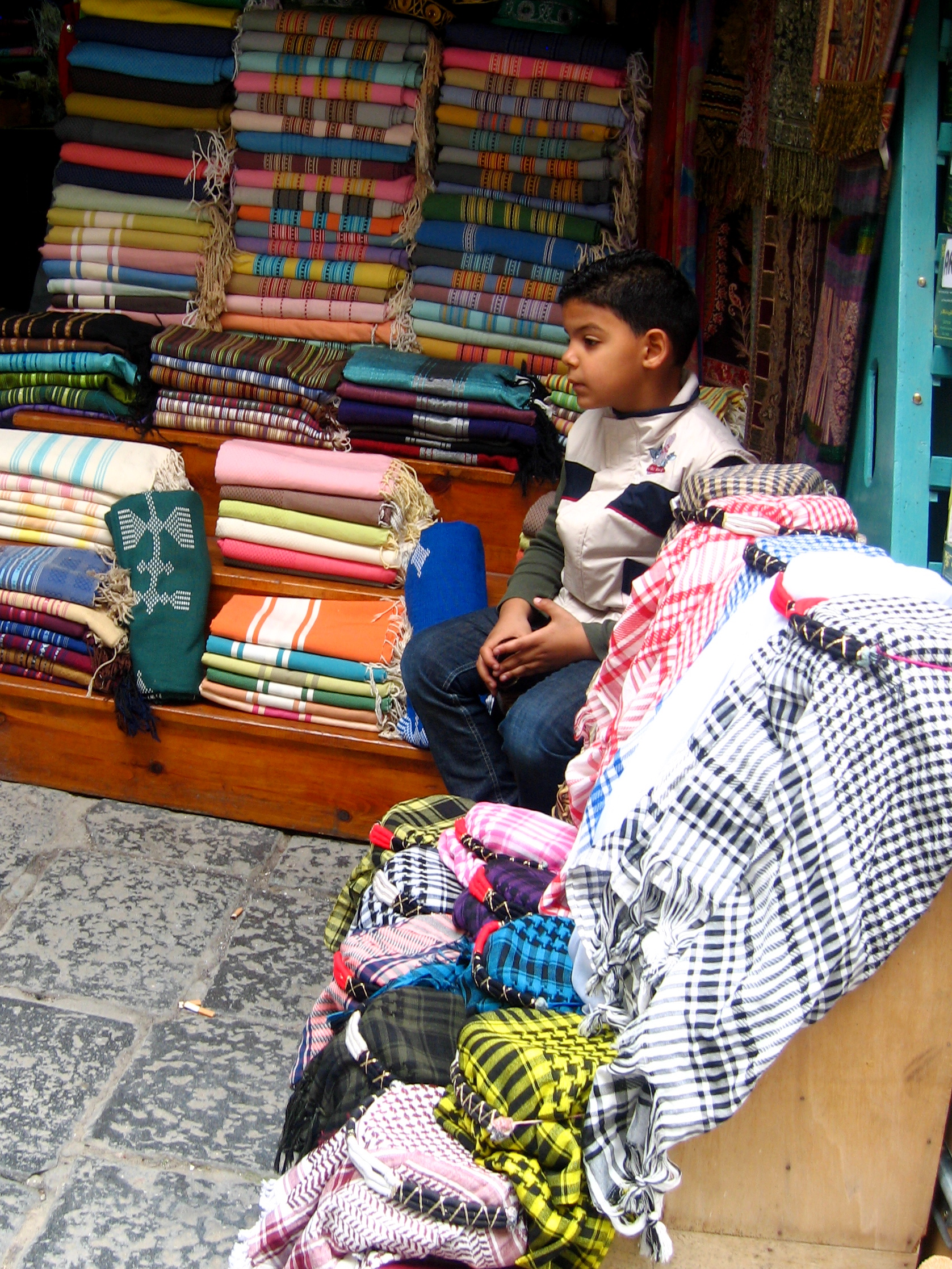
Boy in reverie, Tunis fabric souk. (Photo: Tagami)
North of the Zitouna Mosque is the Souk El Attarine known for essences and perfumes leading to Souk Ech-Chaouachya (Chechya). The main company that operates it is one of the oldest in the country and they are generally descendants of Andalusian immigrants expelled from Spain. “Souk El Bey”, the souk of the King, is located right after the Souk El Chaouachya. I’m told the Monarch, his family and friends used to shop there.
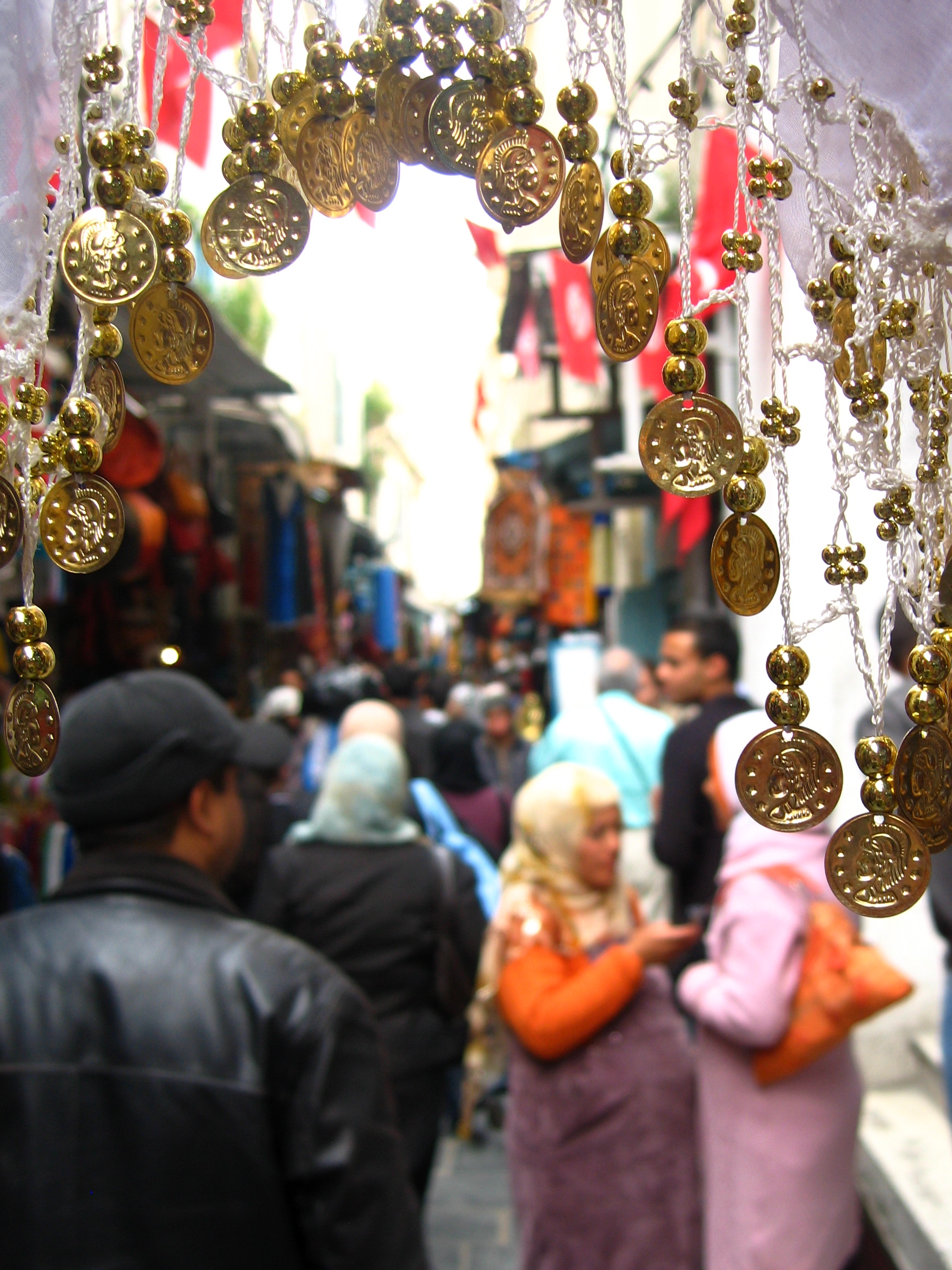
Girl Talk, Tunis medina. (Photo: Tagami)
West of the Zitouna Mosque, is Souk El Kmach for fabrics and Souk El Birka, filled with embroiderers and jewelers. In the middle there is a square where the former slave market stood until the middle of the nineteenth century. Souk El Birka leads to Souk El Leffa, where you can bargain for carpets, blankets and other textiles, and extends with the Souk Es Sarragine, which specializes in leather. At the periphery are the souks Et Trouk, El Blat, El Blaghgia, El Kébabgia, En Nhas for copper, Es Sabbaghine for dyeing and El Grana for clothing and blankets. I’ve not yet found a complete map of these various markets, however this medina tourist guide is a good start.
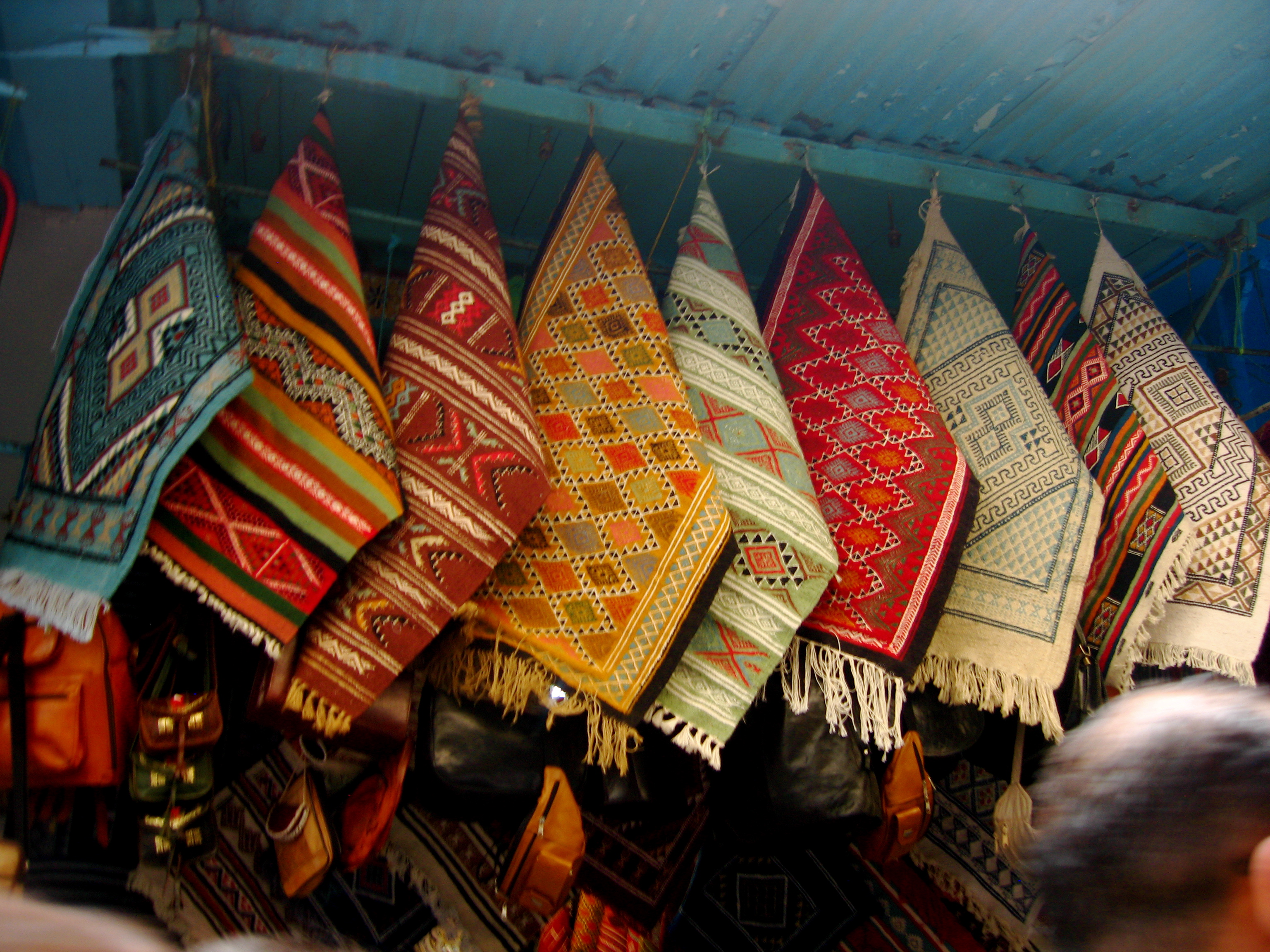
Woven goods, Tunis medina. (Photo: Tagami)
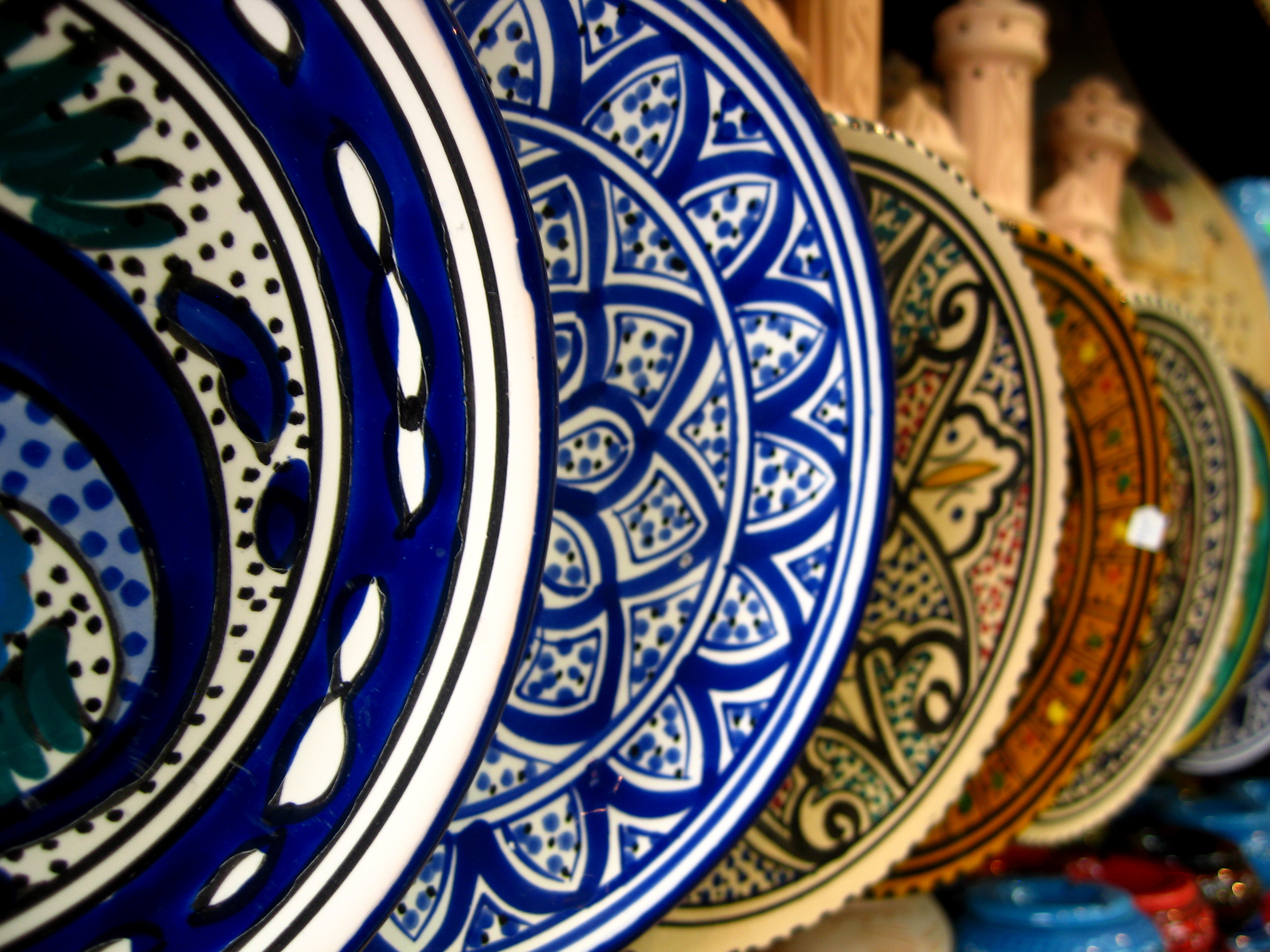
Handpainted plates, Tunis medina. (Photo: Tagami)
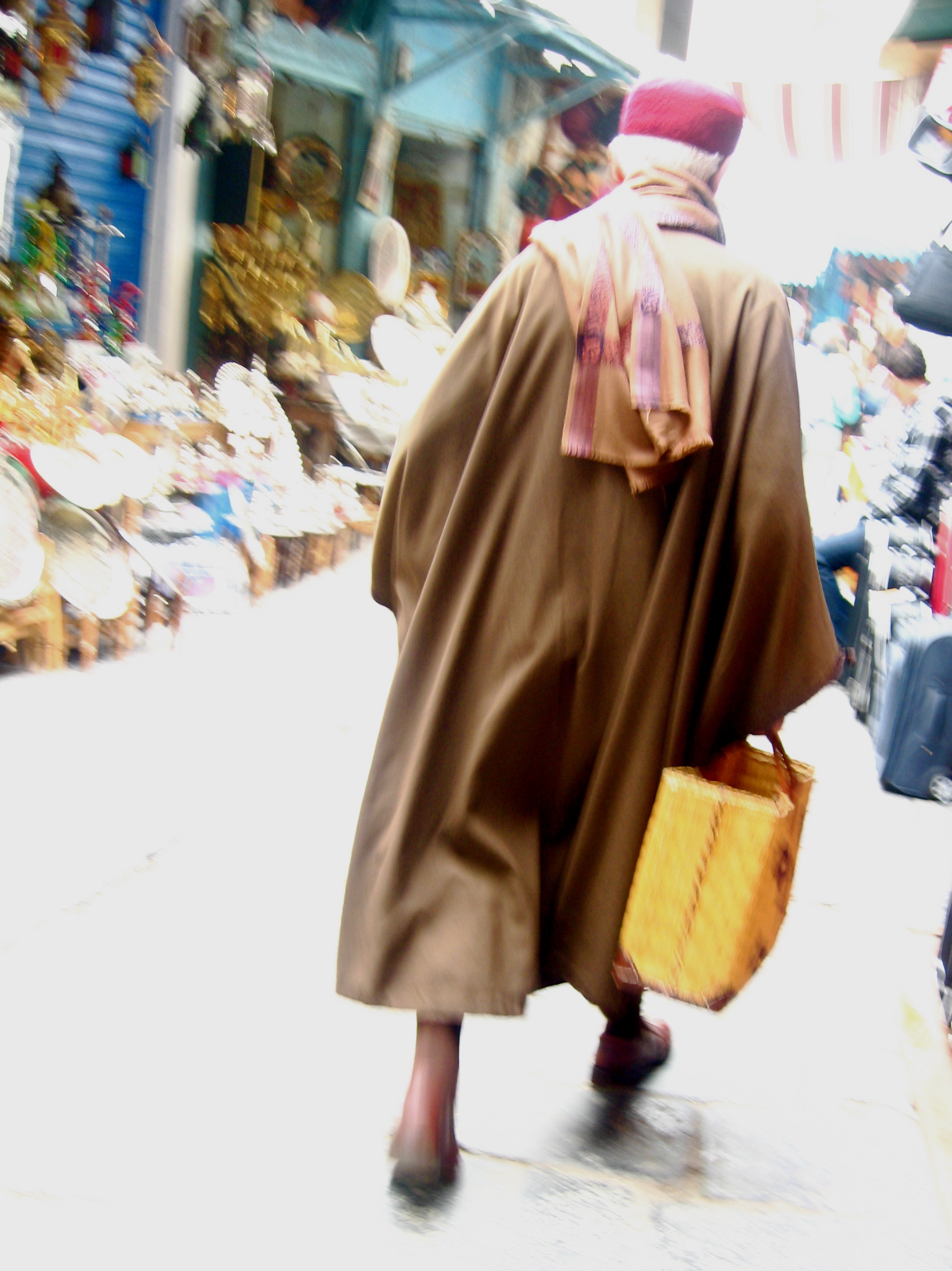
Saturday shopping, Tunis medina. (Photo: Tagami)


Welcome back, Liz. You’ve captured our day in Tunis perfectly. 😉 S.N.
Extraordinary historical and current description. Please share with Professor Gordon at Mills.
Fabulous, Liz … especially taken with the photo of the freshly baked bread (I can smell it!) and those gorgeous plates!
Wonderful! You’ve just placed Tunis in my bucket list of places to visit. Thanks!
Thanks,very beautiful.
The wonder of travelling is the feeling of being in a different place. A change is like a relaxation course. Every one should travel to another place at least once in their lifetime.
Very good blog post. I absolutely appreciate this site. Keep it up!
Liz
I would be interested in using a couple of your images please.
You can contact me on twitter
@yarnsandfabrics or through facebook http://www.facebook.com/YarnsAndFabrics
Reblogged this on Tayseer Album.