
Jerusalem Jewish Quarter, HaRova HaYehudi
On August 10, 2010 by Liz TagamiRefreshed from a just-squeezed cup of pomegranate juice from the sidewalk café on Muristan Road our group stood, stretched, and trooped en-masse south back toward David Street and into HaRova, the Jewish Quarter.
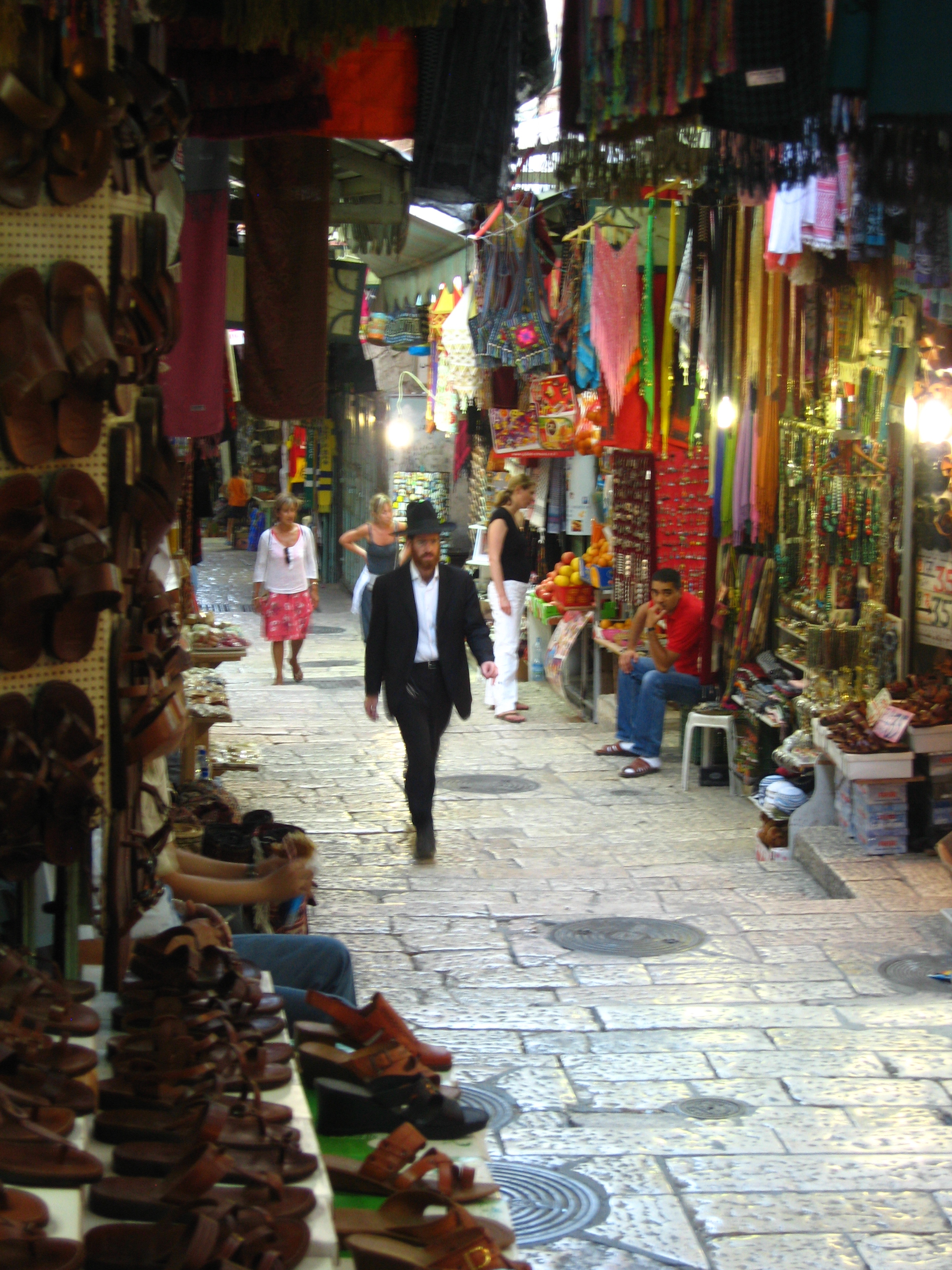
Walking Uphill on David Street, Jerusalem
David Street runs west to east, from the Jaffa Gate to the Souq Khan el-Zeit, then turns into ha-Shalshelet aka Chain Street, and this is where we crossed to visit two major landmarks, Emperor Hadrian’s Cardo Maximus and then on to the Western Wall.
HaRova rests on land even higher in elevation than the Temple Mount, and was settled from the time of King Hezekiah circa 700 BCE after the original Davidian city outgrew its borders.
Destroyed in 586 BCE by the Babylonian Nebuchadnezzar, it took centuries after the Babylonian captivity to rebuild the district.
Leveled once again — this time by the Romans in 70 CE — burnt ruins have been found from this destruction. The Romans built upon these ruins, and ubiquitous to their rule throughout the Empire in coloniae, military camps and cities, they engineered a north-south oriented colonnaded street which was lined with vendors and shops. It was Main Street, and it was called The Cardo Maximus, literally, “the Major Line”. If you click the map for a closer look, you can see the Cardo as two parallel lines on the left, marked “❶”
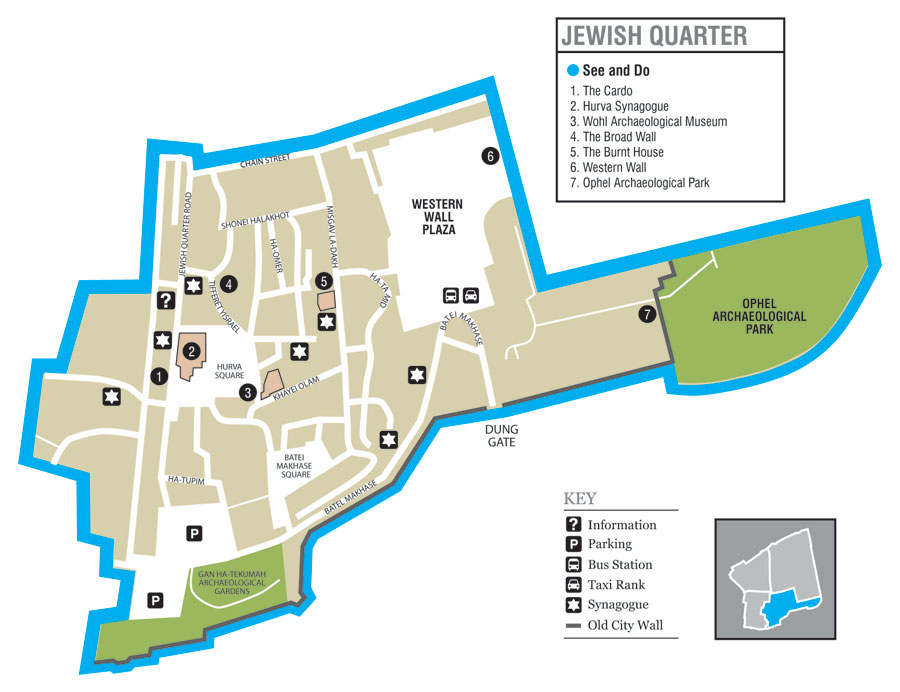
Jerusalem Old City: Jewish Quarter
What is remarkable is that the northern end is completely under modern buildings, and there are open spaces and shafts covered with bars which allow one to see how far the land has been built up after each destructive wave of invaders. Continuing south, a section has been left to the open air where you can see the arches formed over ancient shops.
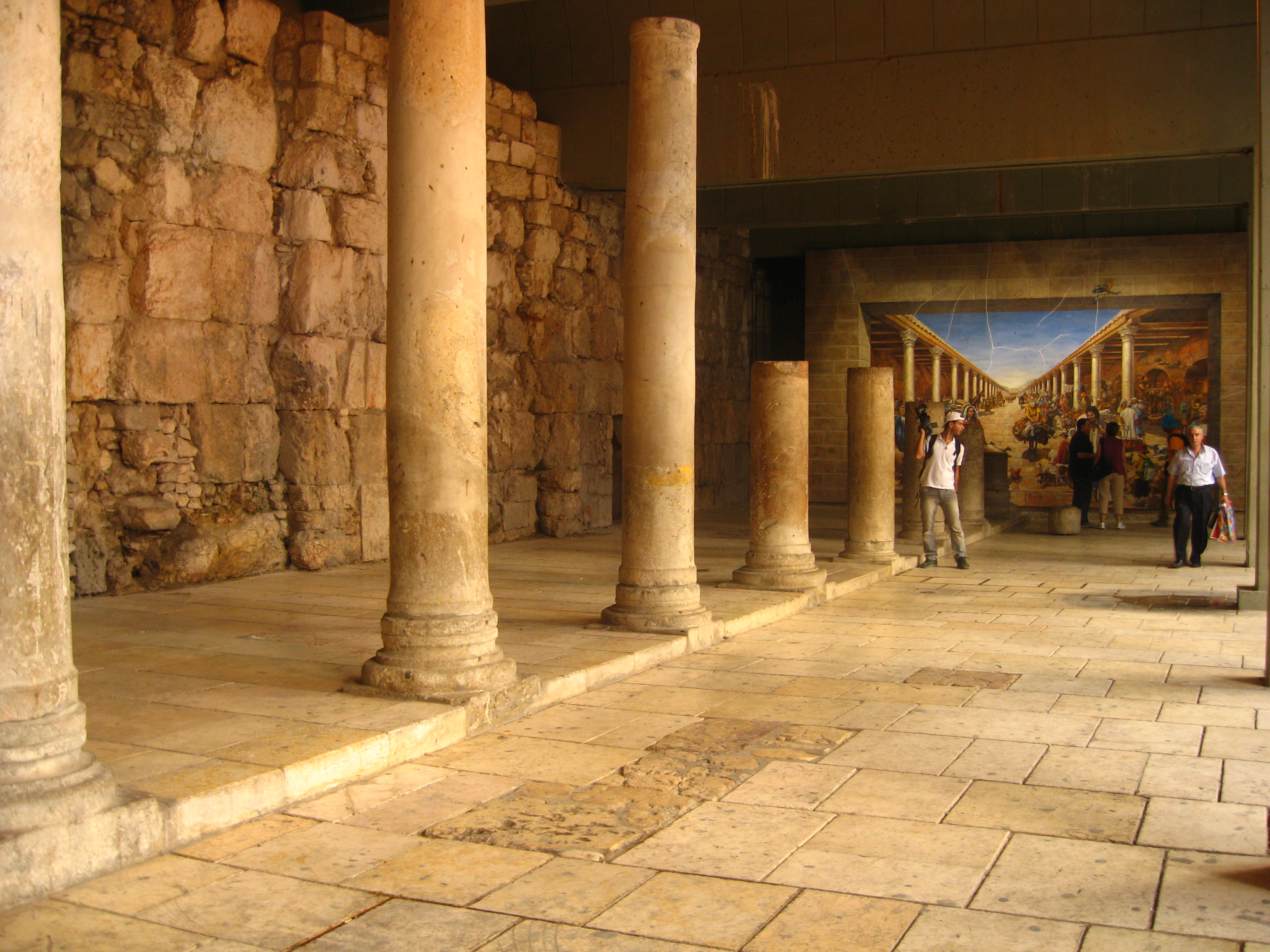
Cardo Maximus, Jerusalem (Tagami)
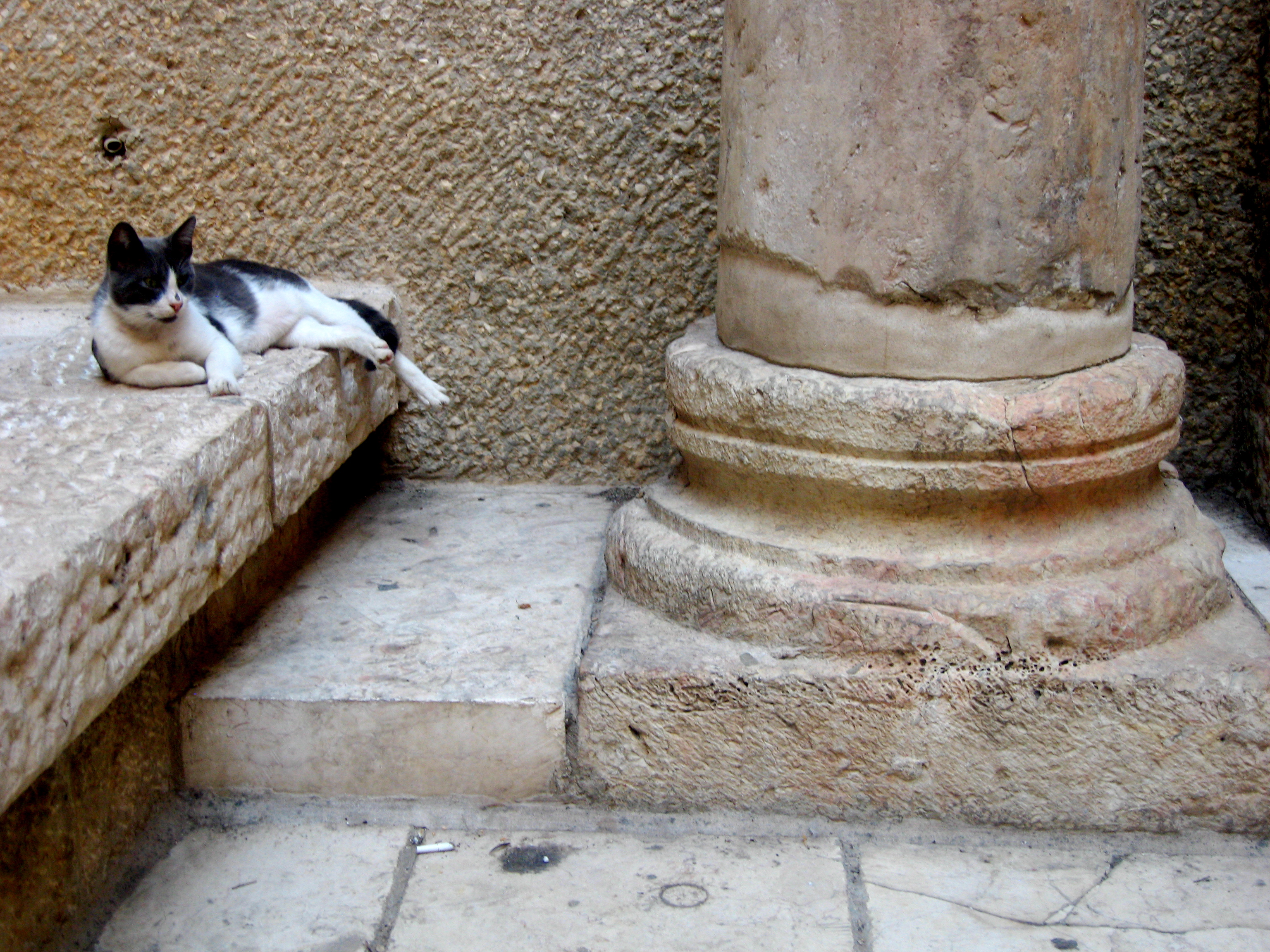
A Ubiquitous Feral Cat of the Cardo (Tagami)
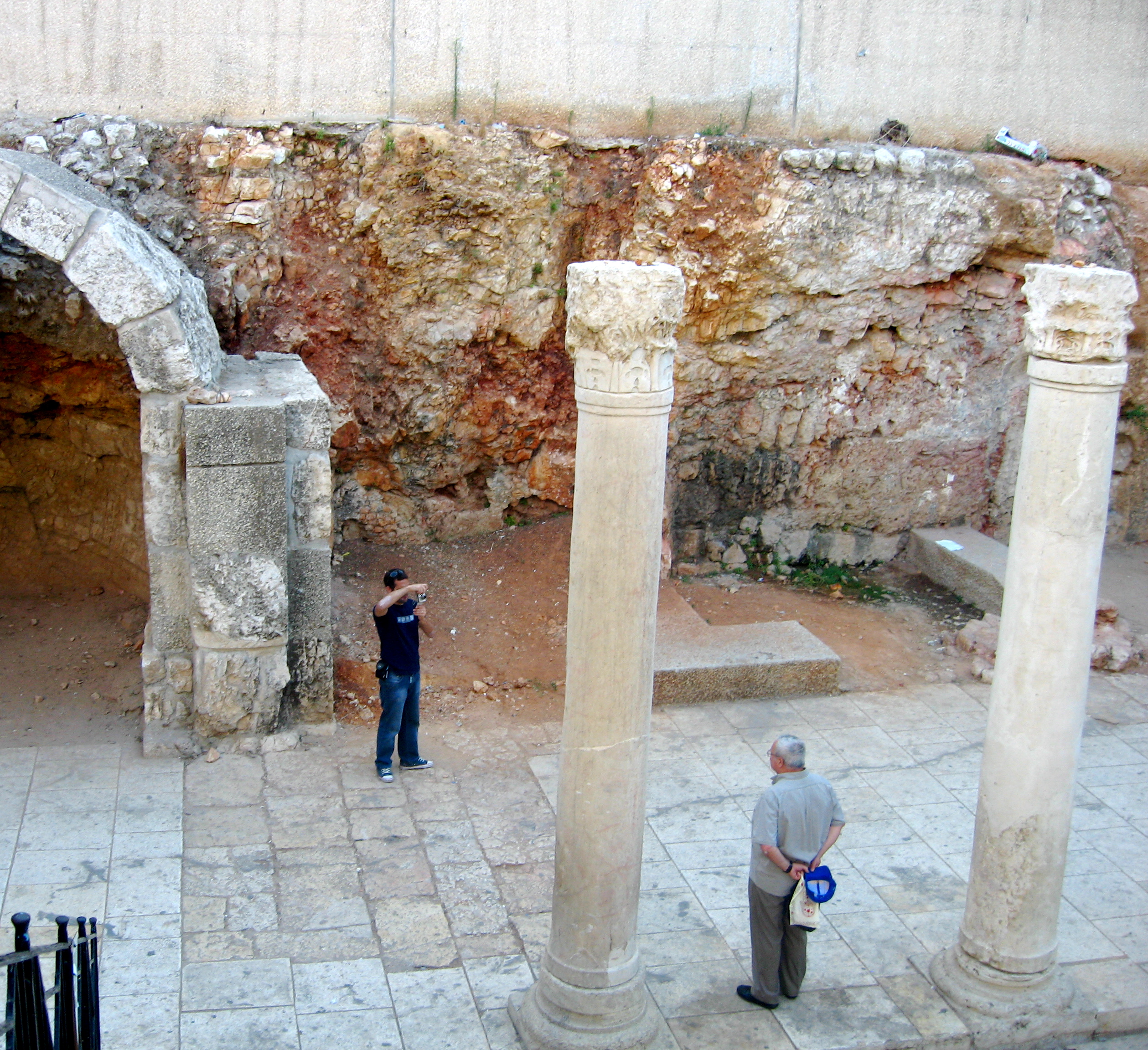
Cardo emerges. Arches stand where shops once offered wares. (Tagami)
After the Cardo, we walked through Hurva Square and down hill to the Western Wall Plaza where stands the massive remnant of the Second Temple structure, constructed in 19 BCE by Herod and destroyed fewer than 100 years later by the Romans in 70 CE. There are 28 courses of stone above ground and another 17 courses below ground.
As twilight approached mothers with young children, some in strollers, crowded into the space reserved for them on the right, and the men gathered on the left.
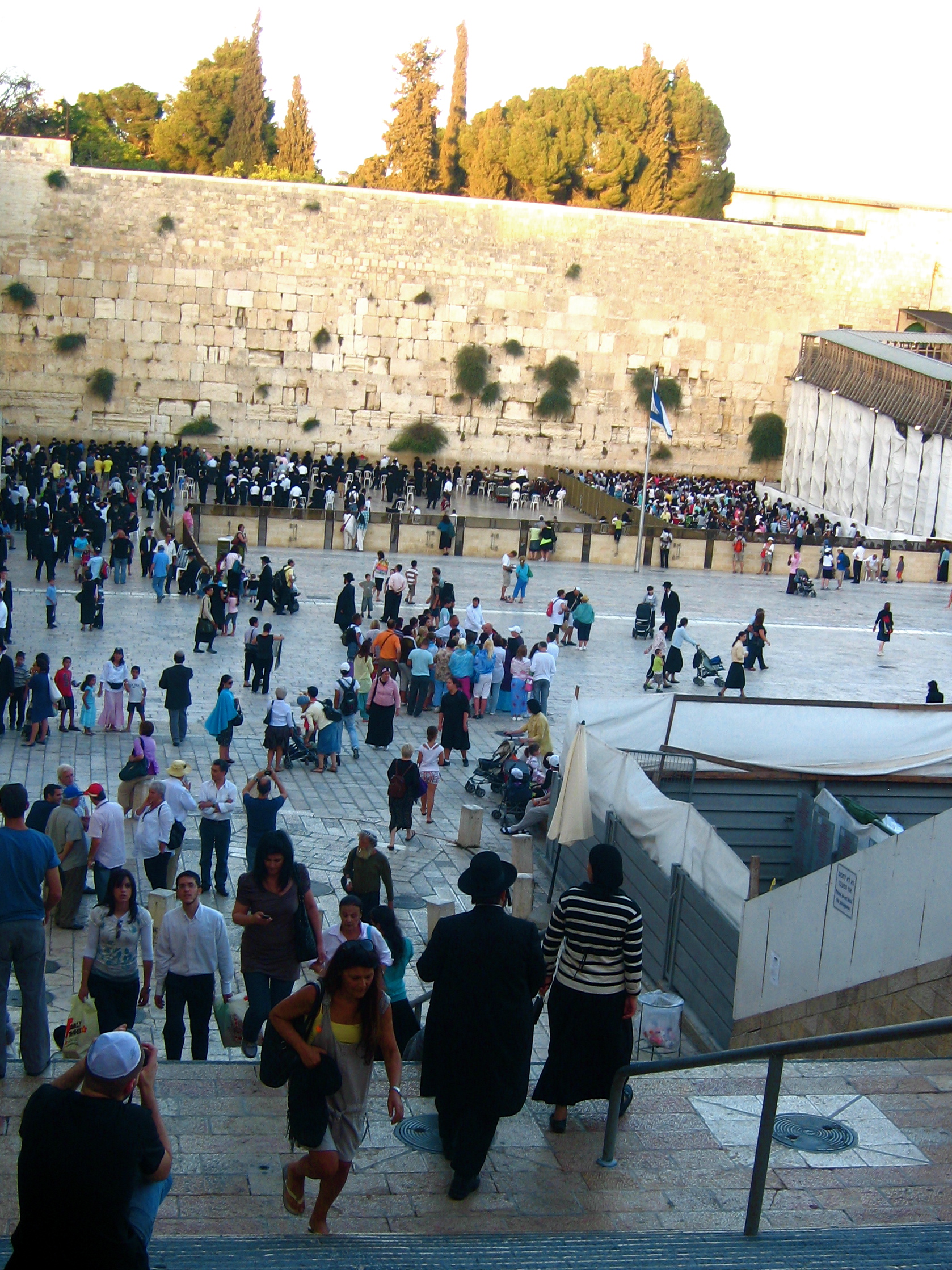
Western Wall, Jerusalem (Tagami)
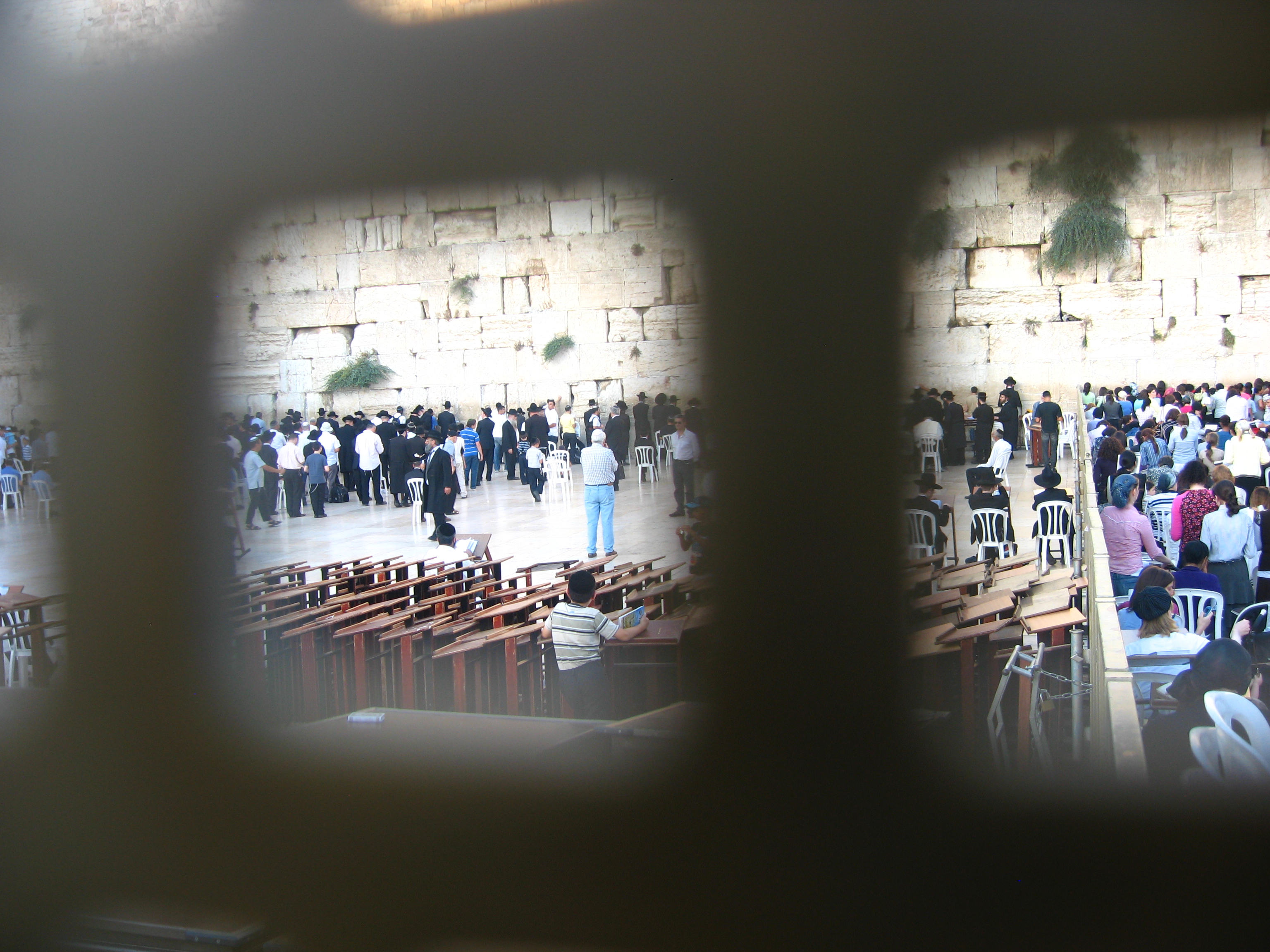
Praying at the Wall (Tagami)


Leave a Reply