
Jerusalem, Ūršalīm: Ramadan Kareem, Ramadan Mubarak
On August 11, 2010 by Liz Tagami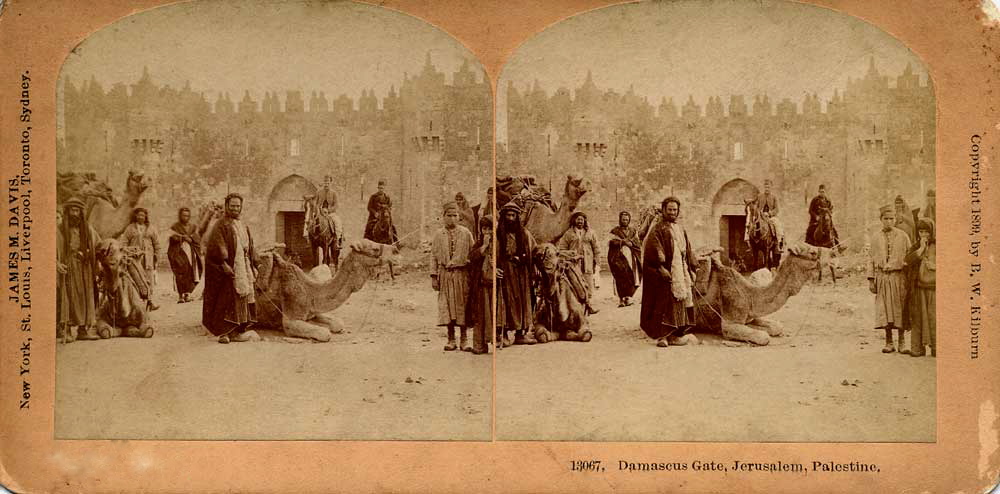
Vintage 3D Postcard, Jerusalem’s Damascus Gate, 1899
It seems fitting that I share a post about the Muslim Quarter in Jerusalem on this first night of Ramadan, a month-long observance filled with blessings. The traditional Arabic greetings for this holiday are “Ramadan Mubarak” (Blessed Ramadan) or “Ramadan Kareem” (Generous Ramadan). This is a sacred time for Muslims, and observing Ramadan is one of the Five Pillars of Islam. To learn more about the observances, there is a quick guide on the eHow.com site that is very accessible: How to Observe Ramadan.
At 76 acres, this is the largest and most populated sector of the four quarters. The northern boundary is highlighted by the Damascus Gate, also known as the Nablus Gate, which runs south to Chain Street (Ha’shalshelet) and the Western Wall. I love the vintage image above, and here is a more contemporary view, below.
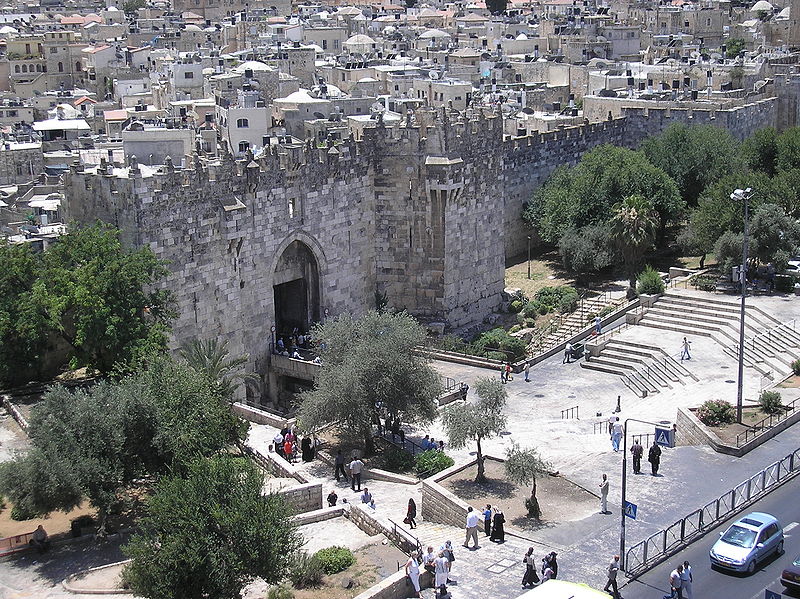
Damascus Gate, Jerusalem
The last day in Jerusalem was a free day, so I walked from my hotel (uphill in 107 F weather) to the Old City and once again entered through the Jaffa Gate and walked down the shop-filled David Street. If you immediately turn right you will visit the Armenian Quarter, however if you proceed a few blocks more and turn right a traveler enters the Jewish Quarter. If upon entering the City through the Jaffa Gate you immediately turn left you will be in the Christian quarter, but walk only a few paces more and you will turn left into the Muslim Quarter — this how marvelously compact the place.
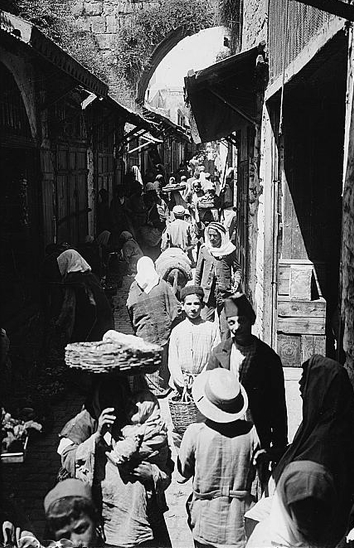
Bab Khan El-Zeit, Pre-1914
My favorite part of walking the Muslim quarter is the Food Souq on Bab Khan El-Zeit, or “Olive Street”, which emerges from the Central Souk. Did you know that Al-Zeitun is Arabic for olive? This is why olive oil in Spanish is aceite, not olio olivo — it’s a legacy from the nearly 800 years of Arab influence on the Iberian peninsula. The Central Souk is comprised of three short parallel streets which once formed part of the Roman Cardo Maximus.
Let me take you through a small part of the quarter via my favorite images from the Bab Khan El-Zeit to the Damascus Gate, and back again to Ha’shalshelet via the partially covered Bab El Wad, which crosses the Via Dolorosa.
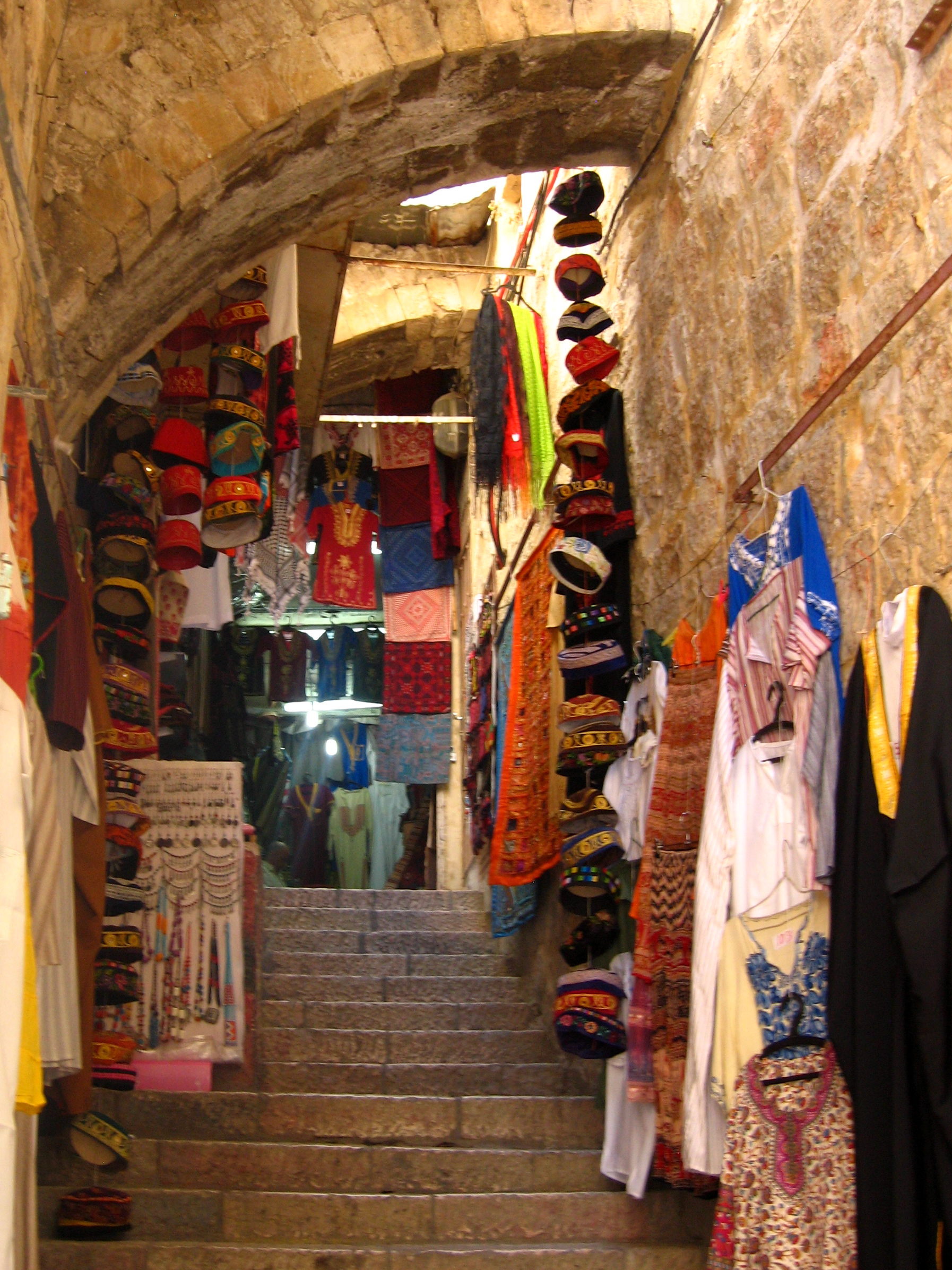
Vendor near David Street, Jerusalem (Tagami)
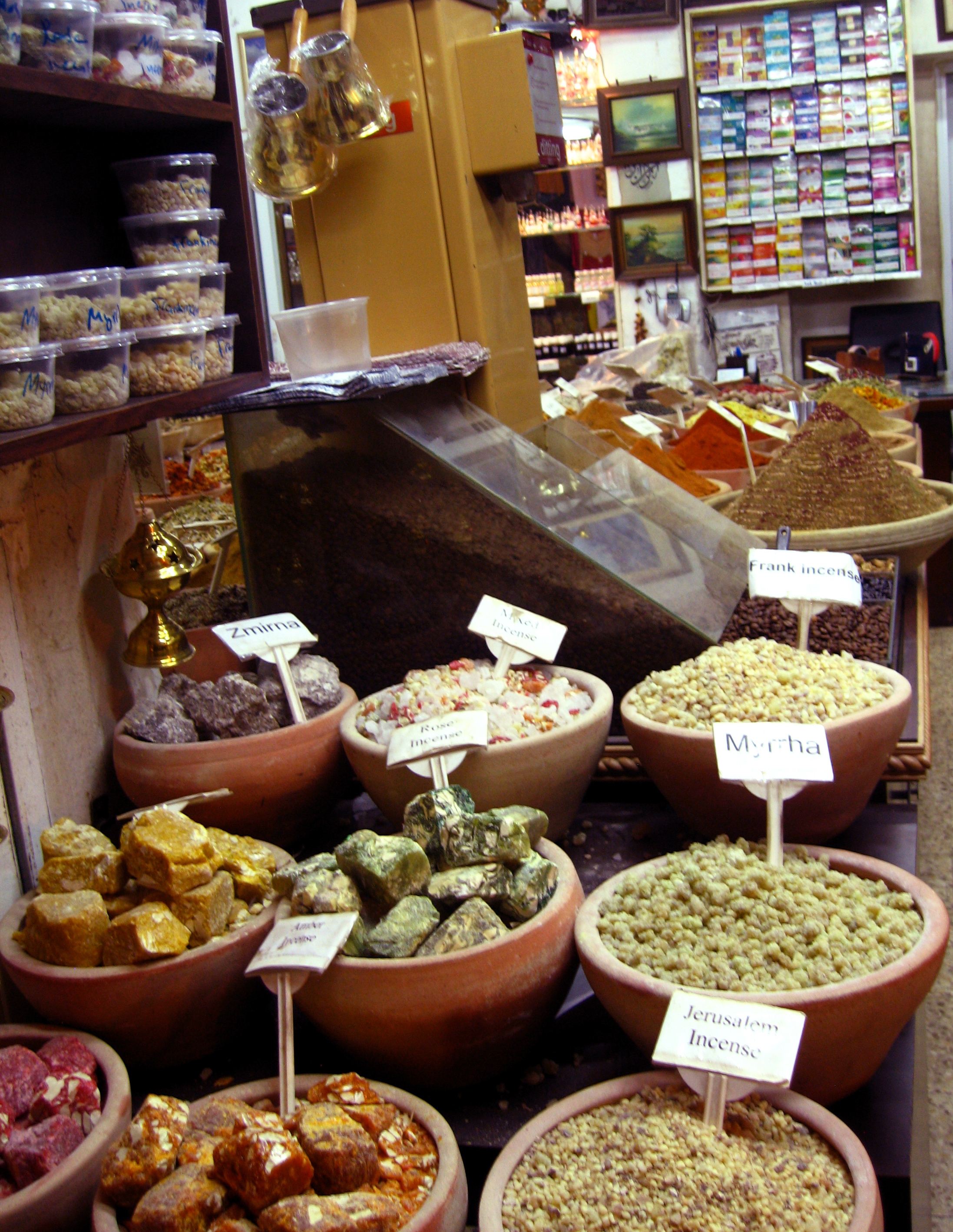
Spices, Soap, Frankincense and Myrrh – David Street, Jerusalem (Tagami)
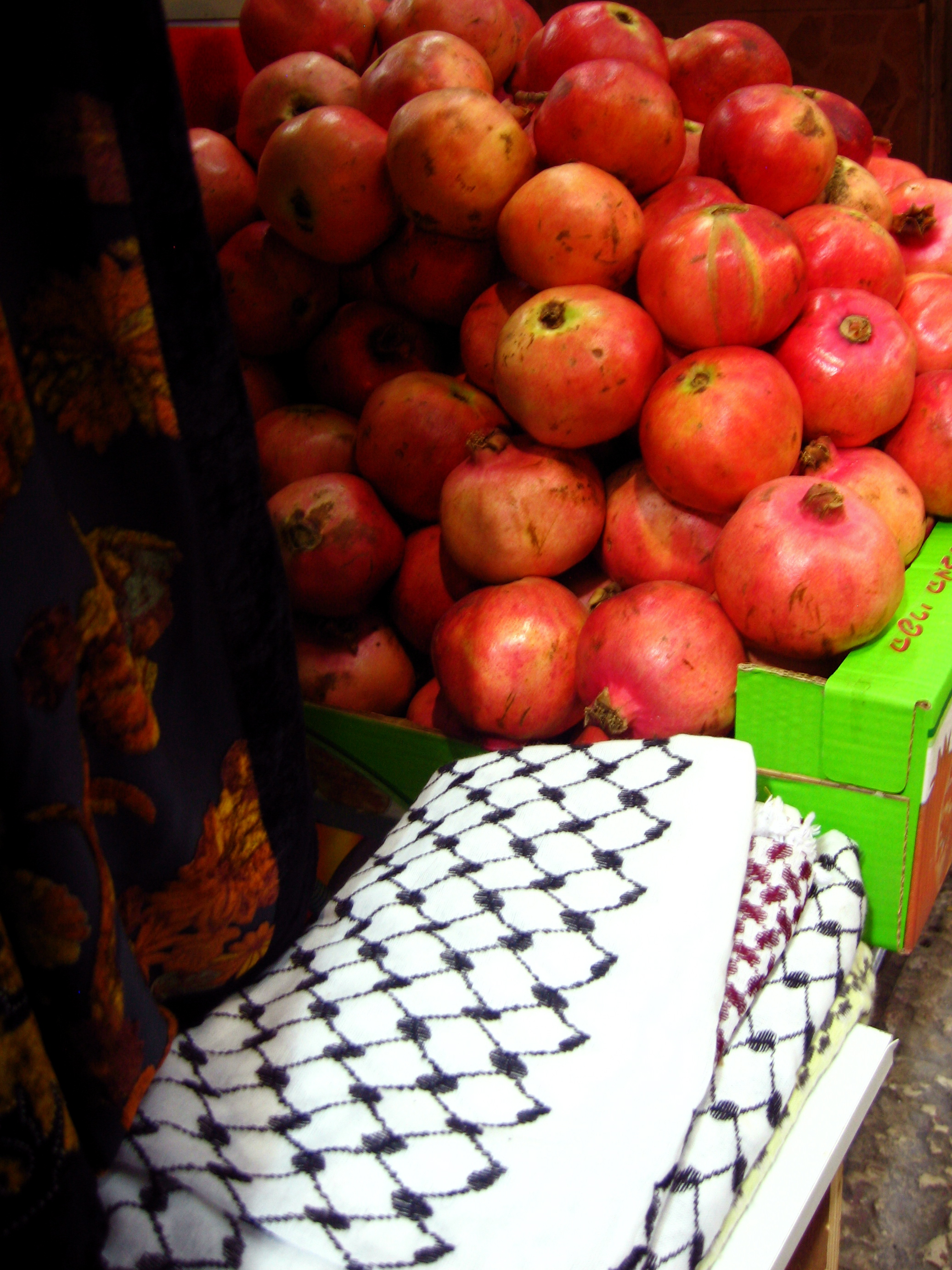
Keffiyeh and Pomegranates – David Street, Jerusalem (Tagami)
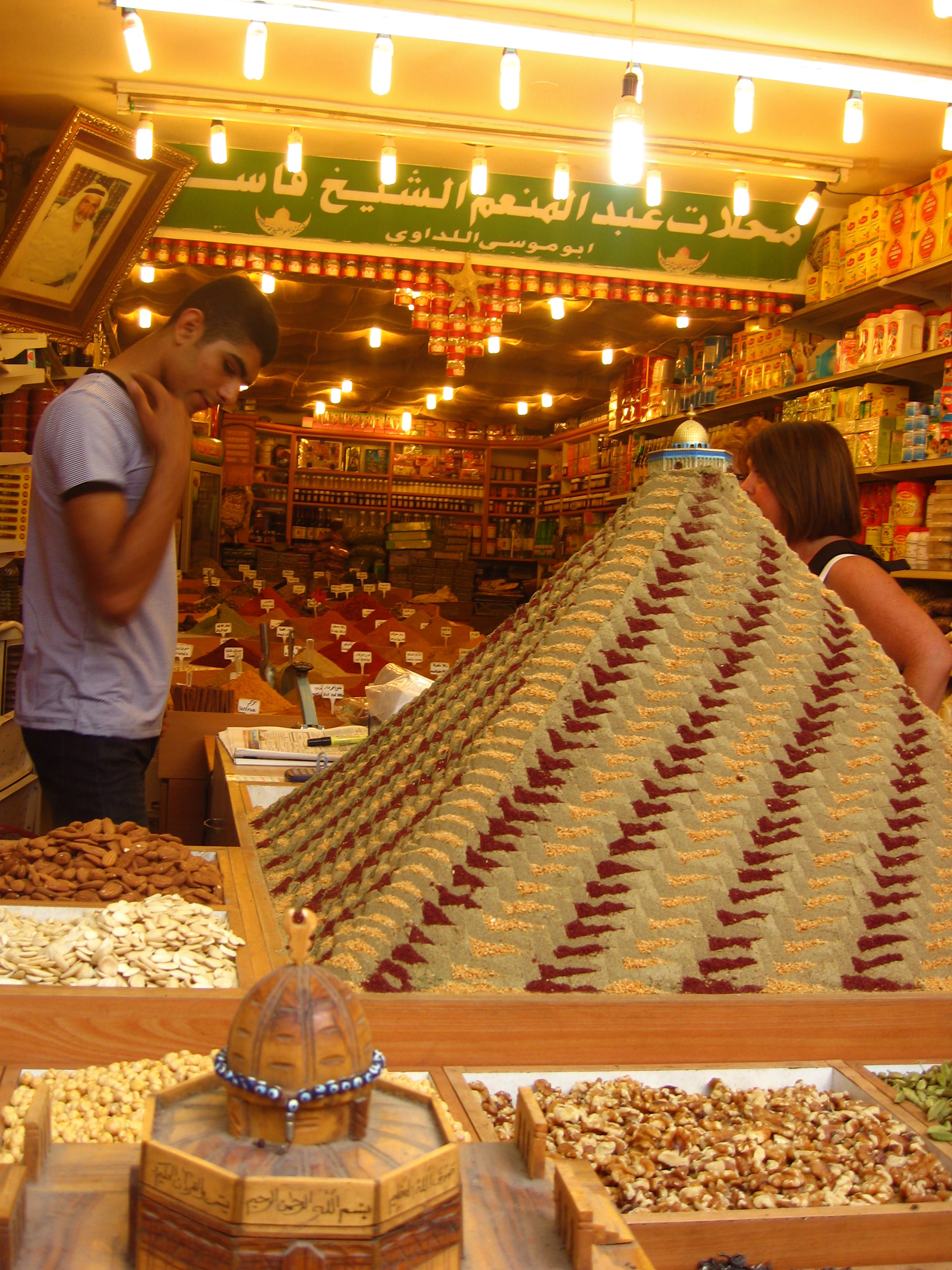
Spice Vendor – Bab Khan El Zeit, Jerusalem (Tagami)
Bab Khan El-Zeit starts with butcher shops in the Central Souk hung with whole or sides of lamb and goat, vegetable sellers, and many other culinary items for daily use. In a stall across from the spice vendor (depicted above) you can buy a hot slice of knafeh, which is a sweet from Nablus. There are several variations, and I enjoyed an enormous slice of the na’ama knafeh type made of small pieces of cooked semolina bound with butter and a sugar syrup / rose-water reduction spread on top of mild Nabulsi cheese, a mild salty sheep’s milk cheese — soft and elastic — reminiscent of mozzarella. This intensely sweet semolina / rose syrup mixture is colored a bright orange and topped with bright green finely chopped pistachios.
Chewy, sticky, crunchy, savory, floral, sweet — it was strangely compelling. I ate the entire slice.
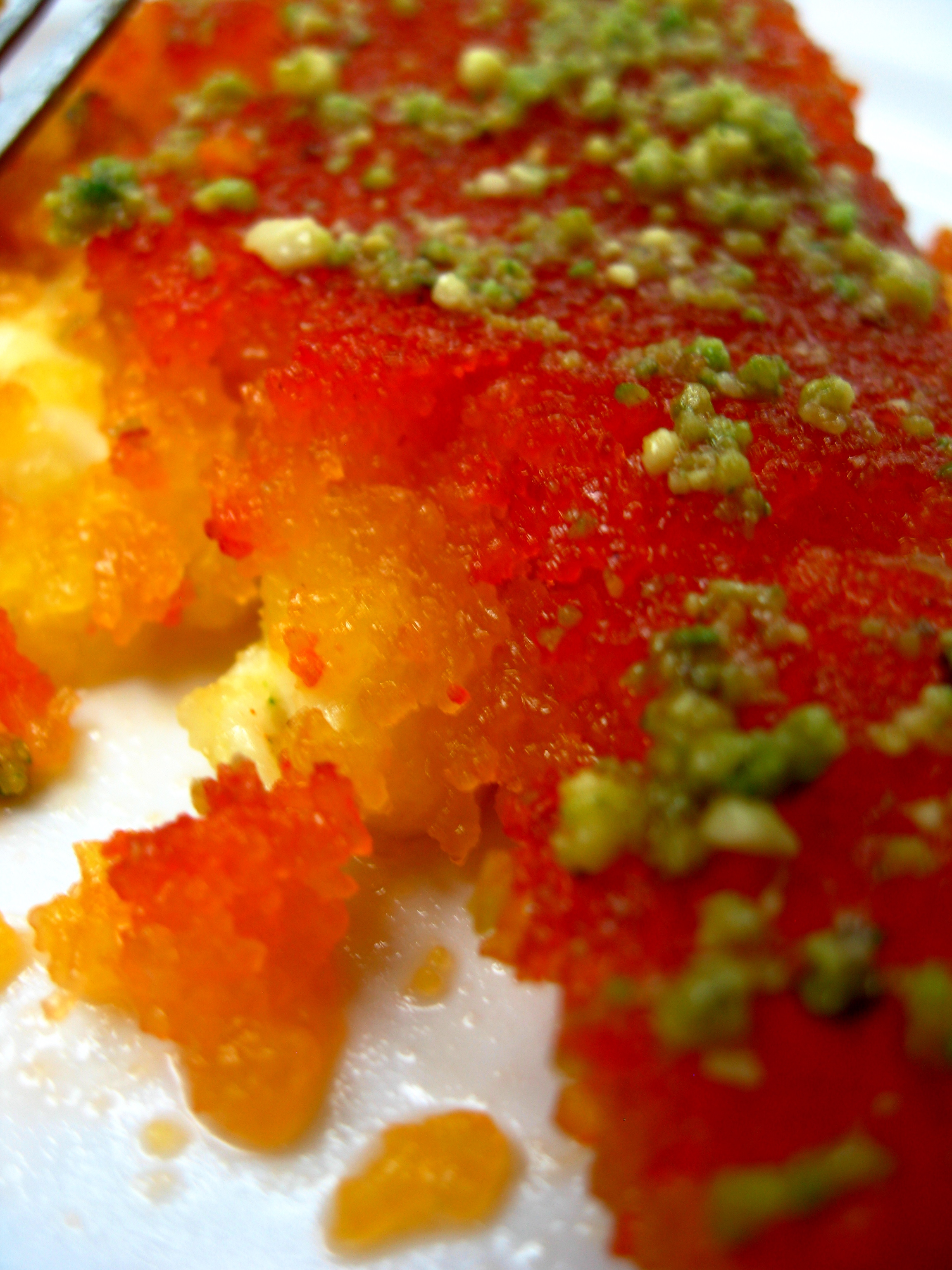
Knafeh in the Old City. I almost forgot to take the photo! (Tagami)
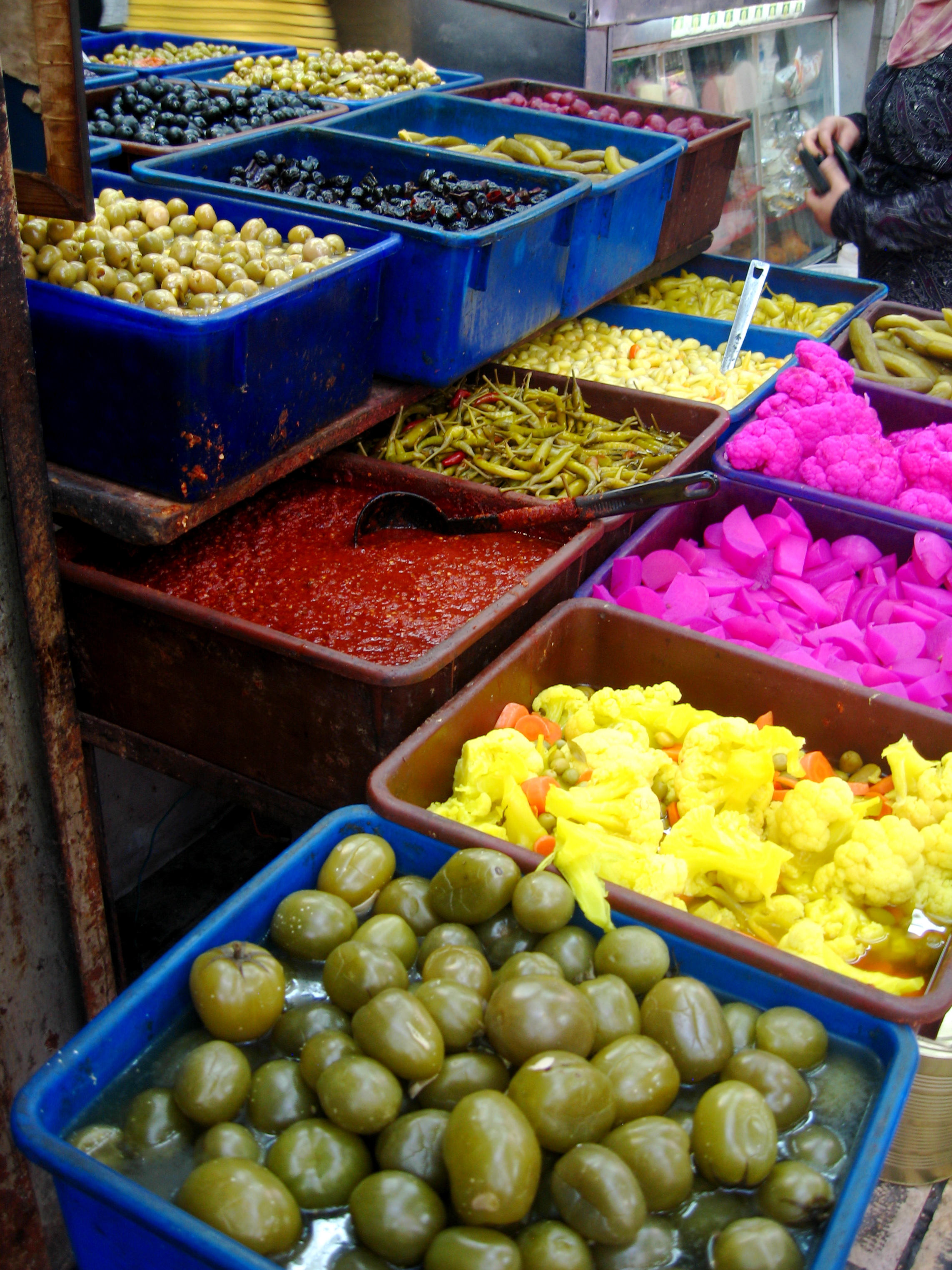
Pickled Veggie Vendor: actual colors! On Bab Khan El-Zeit (Tagami)
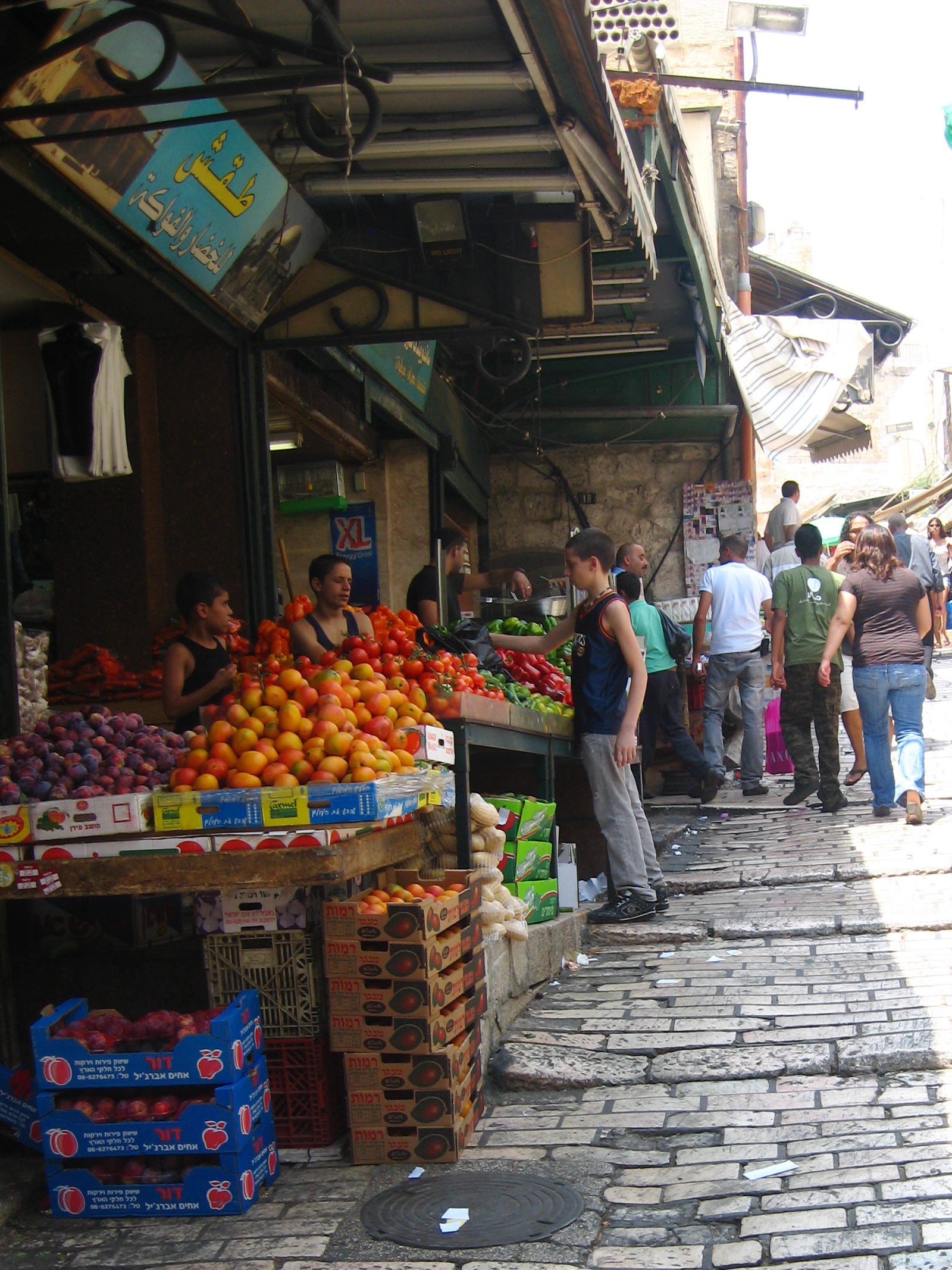
Fruit Seller near Damascus Gate, Jerusalem (Tagami)
When I was in Tunisia last March I was privileged to have a traditional Bedouin breakfast in a truly ancient olive grove. After a dusty march (or bumpy 4WD lift) we were greeted with a terra cotta cup filled with lagmi or legmi, a sweet drink made from the sap of a palm tree trunk. Today, as I walked from the Damascus Gate back toward the town center I came upon a lagmi vendor. Lagmi is the local name in Tunisia, and I’m sorry to say that I don’t know the Palestinian word for the drink or the vendor, but the light refreshing beverage I enjoyed was the same in any language. As you can see from these three photos, the vendor carries a large brass canister on his back. He leans forward to use gravity to dispense the liquid, and he carries cups, change and a big smile in the front!
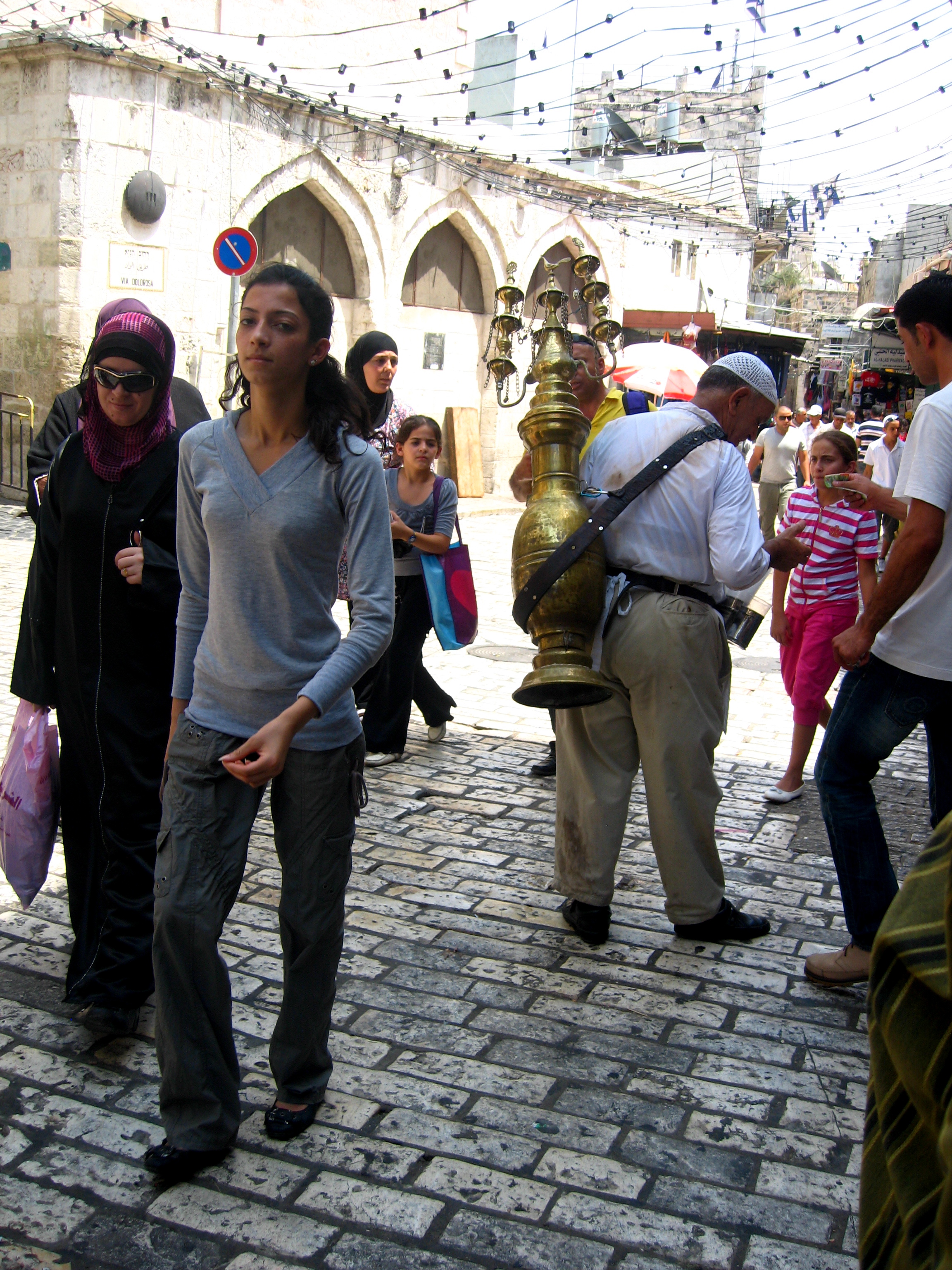
Lagmi Vendor on Bab El Wad, Jerusalem (Tagami)
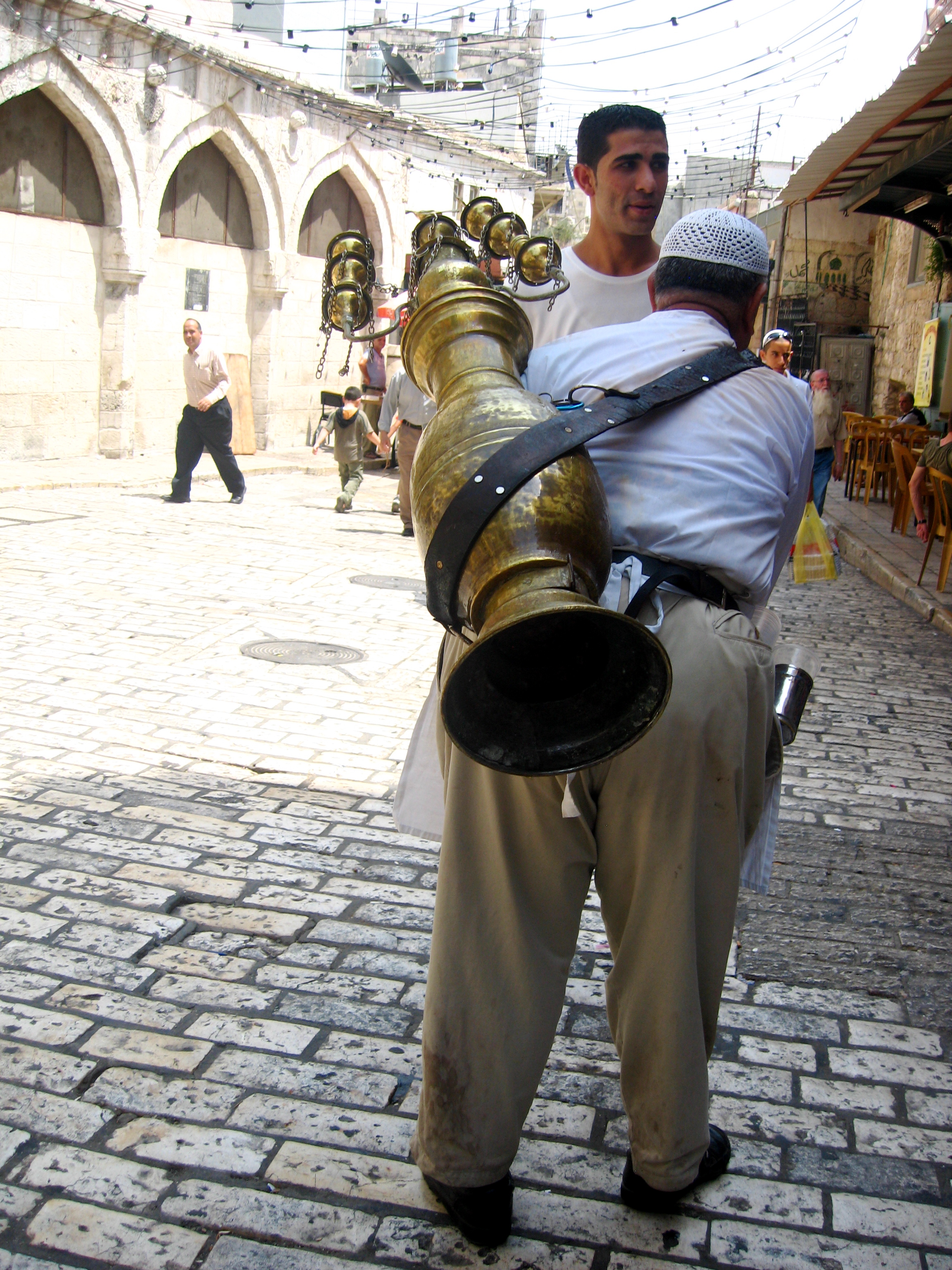
Lagmi-man leans forward to dispense the beverage (Tagami)
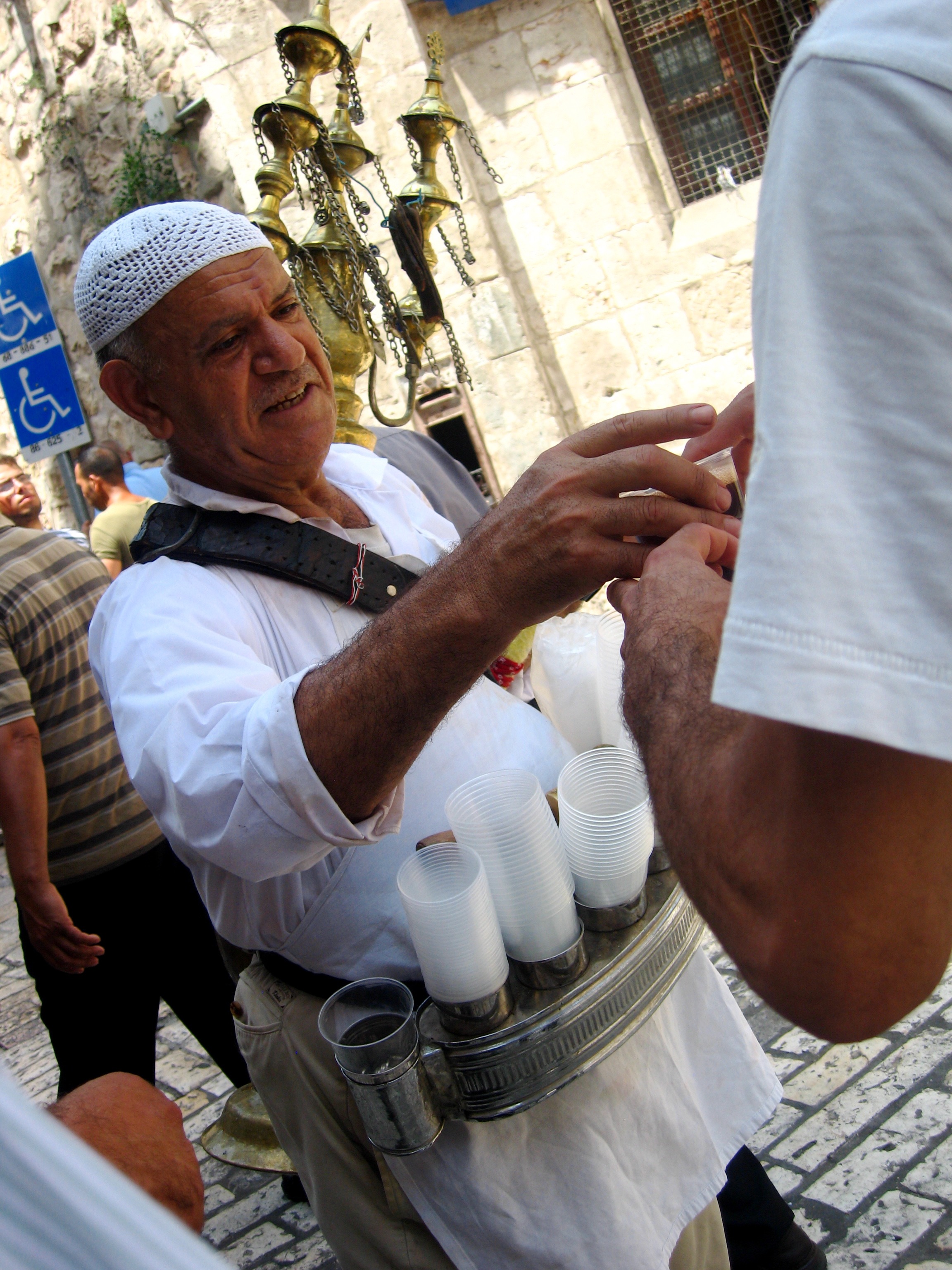
Smiles and Lagmi, only a few shekels (Tagami)
Nearing the end of the Quarter, I turned off the Bab El Wad and walked through the Cotton Souq, Al Qattanin Street. I had hoped that this market would be a wholesale market, but it was filled with consumer goods and the entrances to two hammam, although I did not see them. The wonder of this little street is that it ends in a stair that ascends to Haram Esh-Sharif, the Dome of the Rock. Non-Muslims cannot enter this way (only depart), and it is always closed on Saturday no matter your belief.
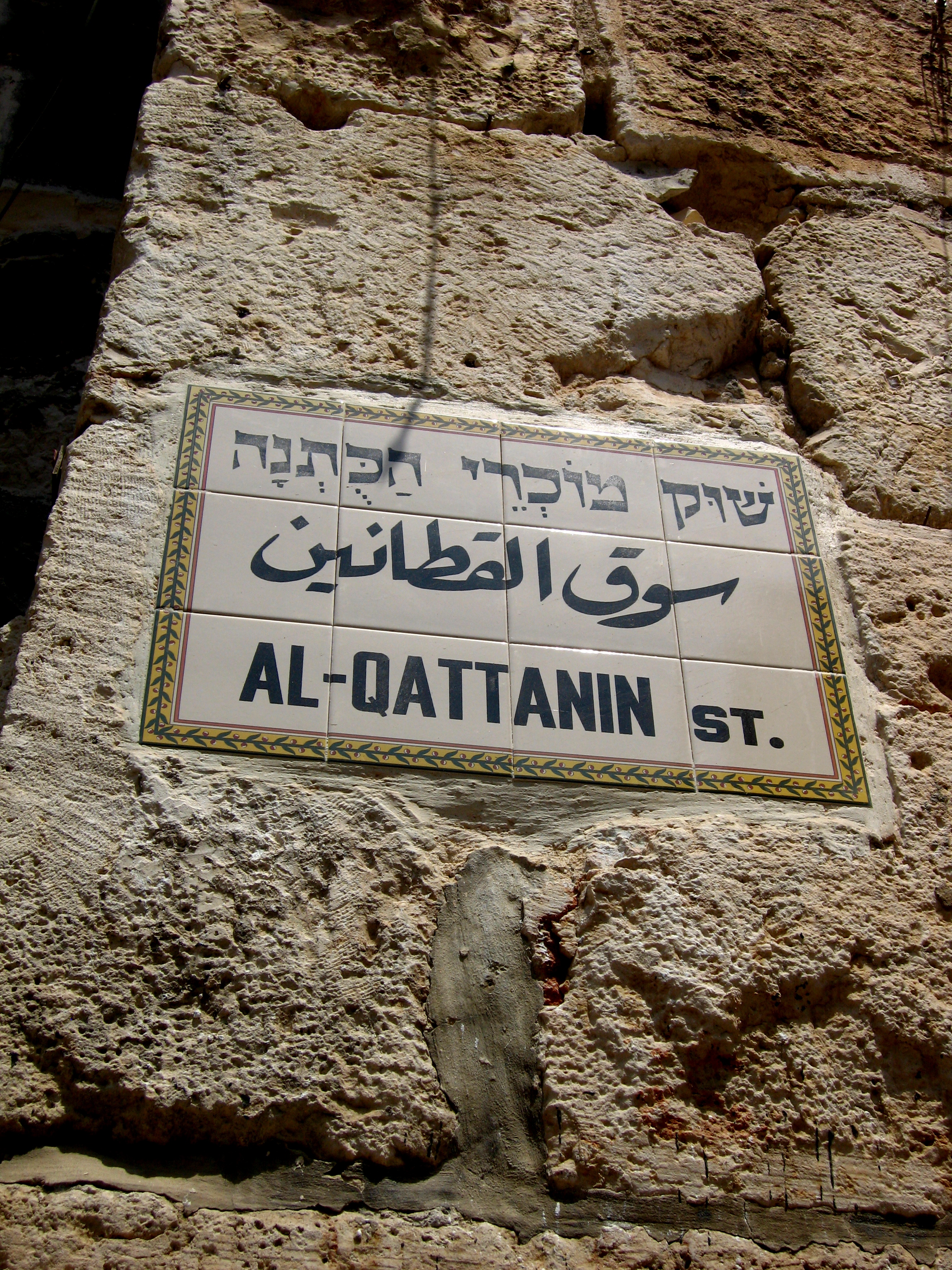
The Cotton Souq off El Wad – To Haram Esh-Sharif, Jerusalem (Tagami)
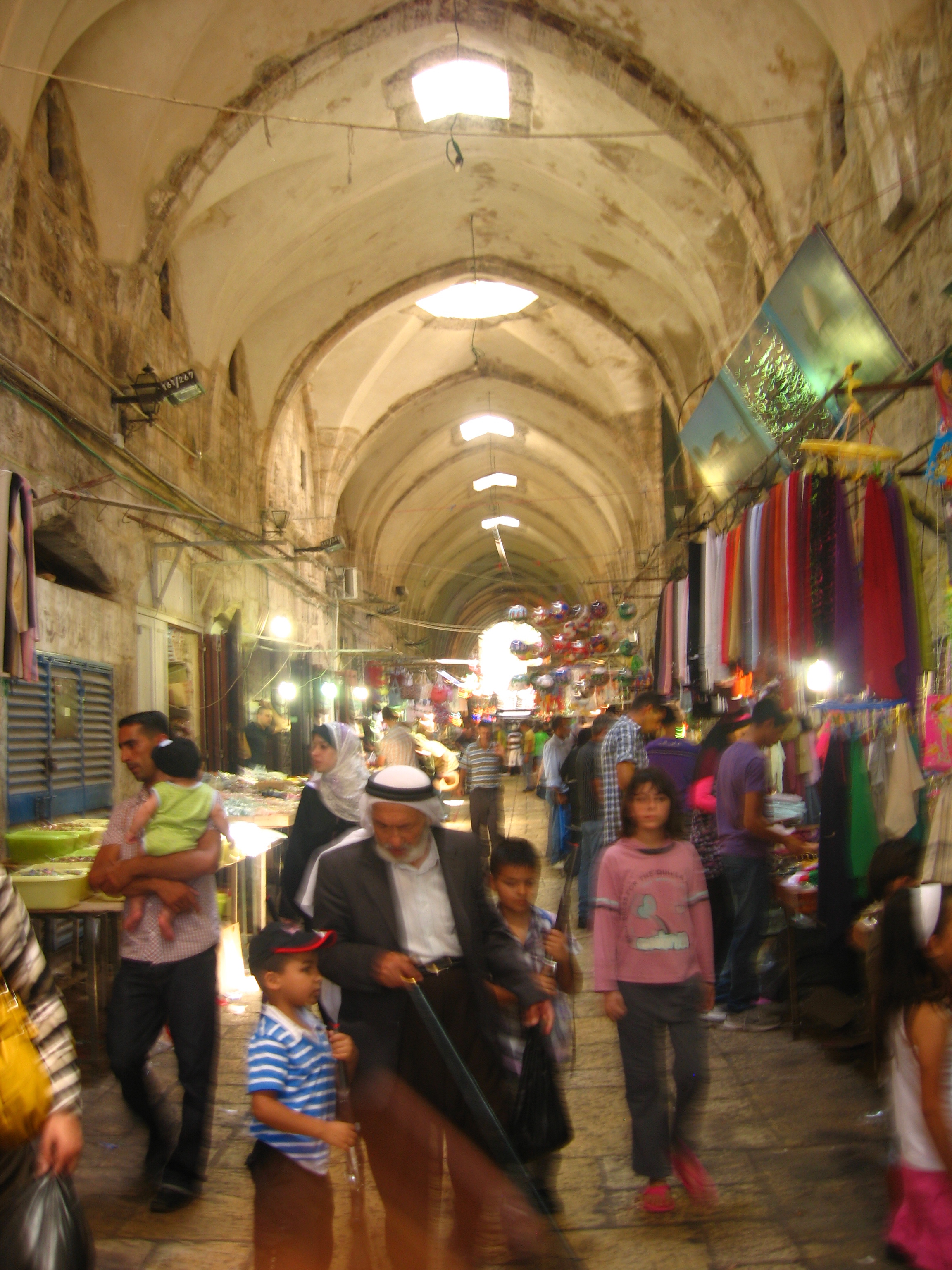
Walking Al Qattanin toward the Dome of the Rock (Tagami)
After being turned around in the middle of the stairs I headed back to El Wad and then across Ha’shalshelet into the Jewish Quarter to walk to the Zion Gate to make my way out of the City. After only two hours the intense heat was too much to continue.
Once the decision was made that it was simply too hot to keep walking, all of my attention turned to “home”, in the case the Inbal Hotel. It wasn’t long before my eye lingered on a doorway, which beckoned. The dark recesses emanated tranquil and cool vibrations at least ten feet outside of its door, and the faded hand-drawn coffee cup and shisha (hookah) on the sign proclaimed this a spot for rumination and reflection. I suppose if I were a man I would have gone in and enjoyed one or the other or both, but that wouldn’t have been seemly in this quarter as a single woman, so I took a mental picture and then this digital one instead.
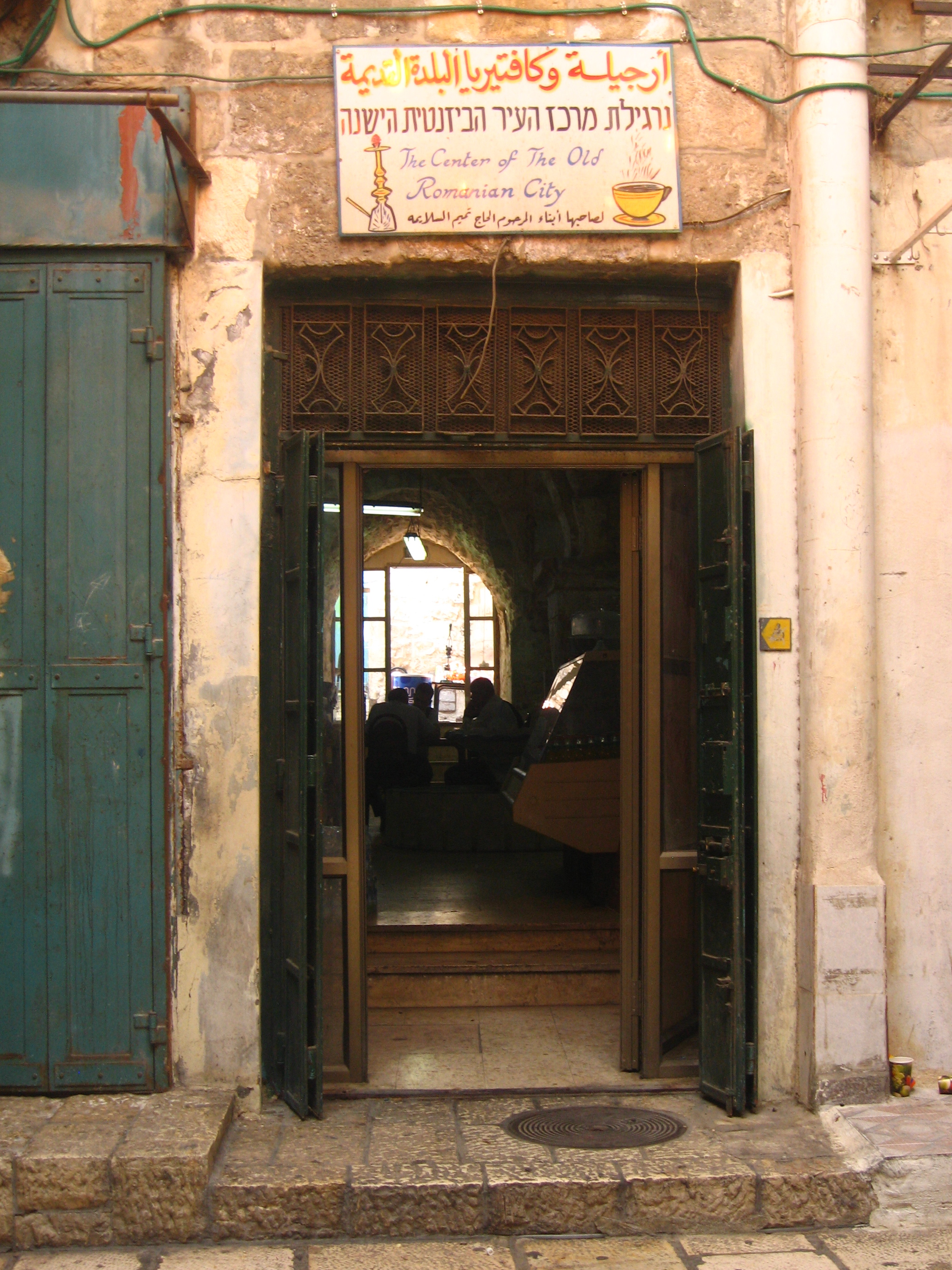
Shisha and Coffee Beckon, Jerusalem (Tagami)
___________________________________________________________________________
Photo by Toki Cavener, effect by PhotoFunia
I have many more articles to write about visiting kibbutzim, modern agronomy, irrigation, Israeli olive varietals, a Kfar Saba lunch, Jaffa, and much more.
Tomorrow I’m looking forward to showing you the vibrant Mahaneh Yehuda market where Moshe and I mingled with hundreds of people shopping for Shabbos. Until then, shalom, salaam, pax.


I like the last photo!
I love the vendor on David Street – and what an amazing portrait! Is that oil?
Thank you for the reference on your site!