
Eat Your Colors at Shipudei Tzipora
On August 12, 2010 by Liz Tagami
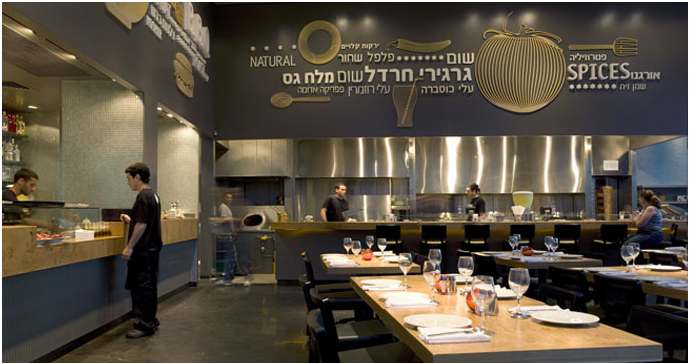
Shipudei Zipora, Kfar Saba (from the designer’s portfolio)
“Most Americans eat far too few foods with any color in them,” says David Heber, M.D., Ph.D., director of the UCLA Center for Human Nutrition. Instead, we tend to eat a high-fat, highly processed “beige diet” full of snack foods and refined grains (bread, cake, pastries) that don’t fit the requirements of our genes. The average intake of fruits and vegetables is only 3 servings a day, when it should be 7 to 11 servings a day.
According to Heber, the varied colors in fruits and vegetables indicate “specific beneficial substances that help to prevent the common diseases that affect many of us as we get older.” Damage to DNA leads to changes in our genes as we age that can result in diseases such as heart disease, cancer, and Alzheimer’s disease. Substances found in plant foods protect our DNA.
Heber has coded plant foods into seven colors, all of which have different health-protecting qualities: red, red-purple, orange, orange-yellow, yellow-green, green, and white-green. “Colorize your diet” to protect your DNA by eating at least one serving (one-half cup cooked or one cup raw) of a fruit or vegetable from each color each day. Huber also suggests that at least half your protein intake be soy…Though the emphasis is on plant-based foods, most of his recipes are not vegetarian.
The above is an editorial review by Joan Price, taken from Amazon.com’s page for “What Color is Your Diet? The Seven Colors of Health”. While I have not read this book, I have been coached to eat my colors for the past five years and this concept came to mind when my colleagues and I stopped in Kfar Saba for lunch.
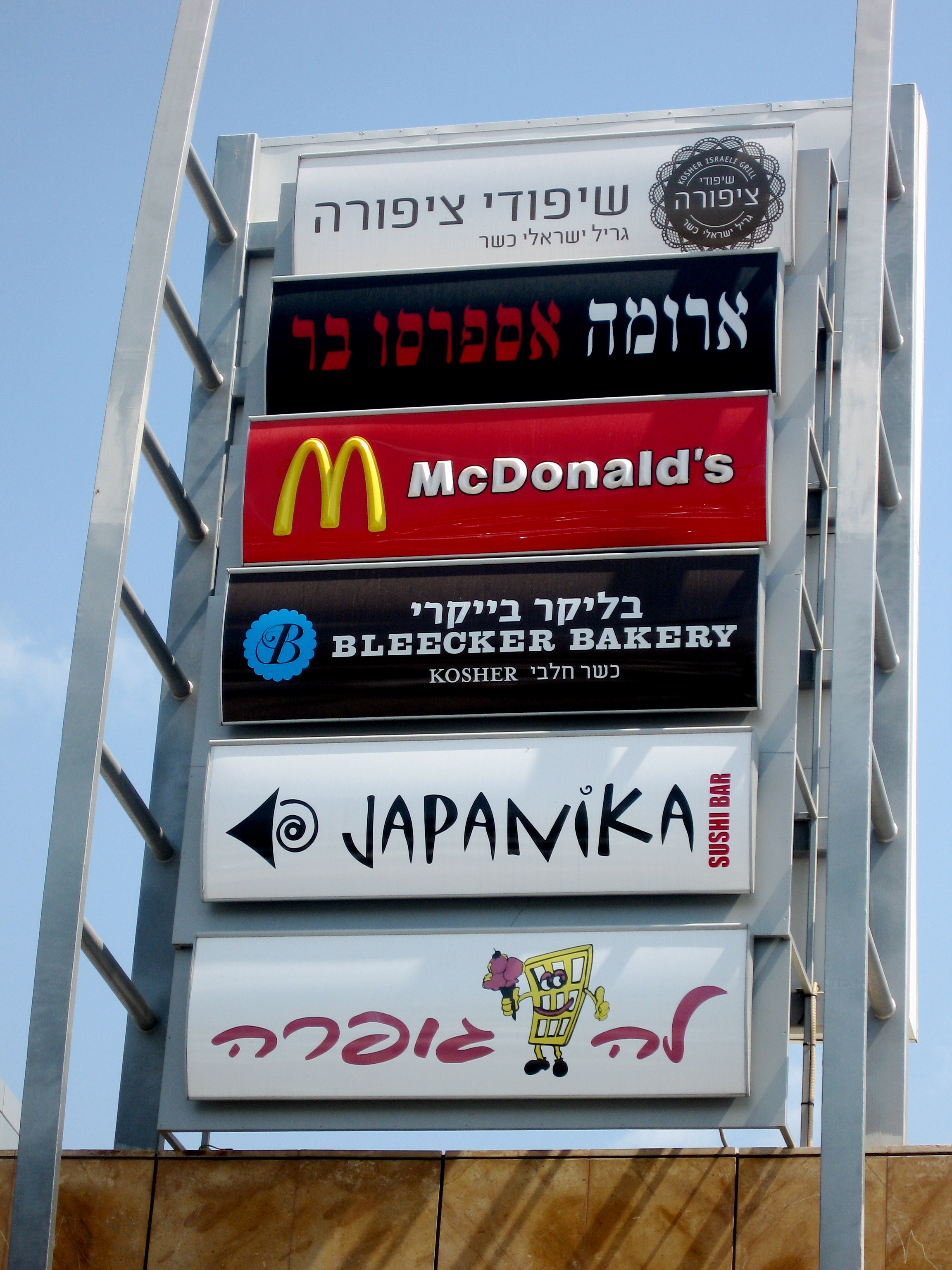
Where to eat? No question! (Tagami)
Kfar Saba is an upscale suburb of Tel Aviv, and the outdoor shopping center we drove into sported an Office Depot and an Imaginarium as well as many local shops. Italian food had been popular all week, and the restaurants here included a sushi restaurant and a McDonalds, but we were in Israel and there was no question in our minds that we had to have Middle Eastern food!! Fortunately, Shipudei Tzipora was there and fit the bill.
The restaurant has a sleek and cool sensibility in terms of color palette and style, which was very welcoming on a hot day. The interior of the restaurant is spacious, inviting, and very cleverly lit using pin spots and natural light to create visual breaks without overwhelming. As we had been inside of the hotel working all morning we asked to be seated outside to dine, and although the day was stifling hot, the generous cafe umbrellas above us and leafy green hedges around us were both cooling and created a sense of intimacy.
Our friend Zohar ordered the salad course, which came in 18 small white square porcelain dishes (plus four round ones) with endless refills. Great rounds of a chapati-like flat bread came to the table and we gorged ourselves on all of the colors you can imagine. Bright orange carrots, deep red beets, dark purple cabbage and vibrant green leafy vegetables were varied in texture, temperature, and seasoning. Hummus, tabouli, and baba ganoush — with variations — rounded out the choices as did two types of cured local olives. Two plates of falafel were ordered to tide us over until our main courses arrived, and the whole thing made a very attractive array before us as we guzzled cold beverages and chatted merrily.
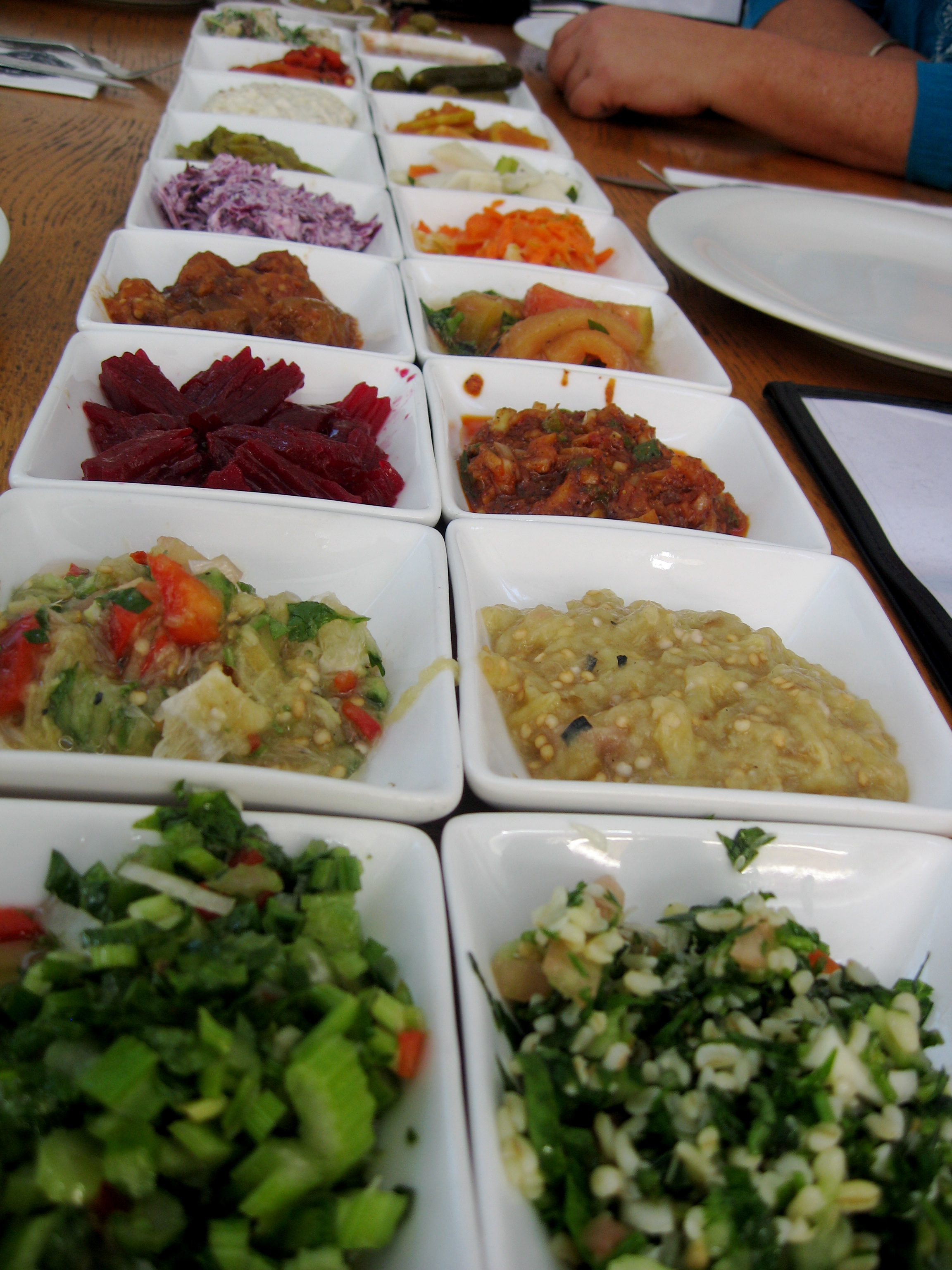
18 Salads to Start (Tagami)
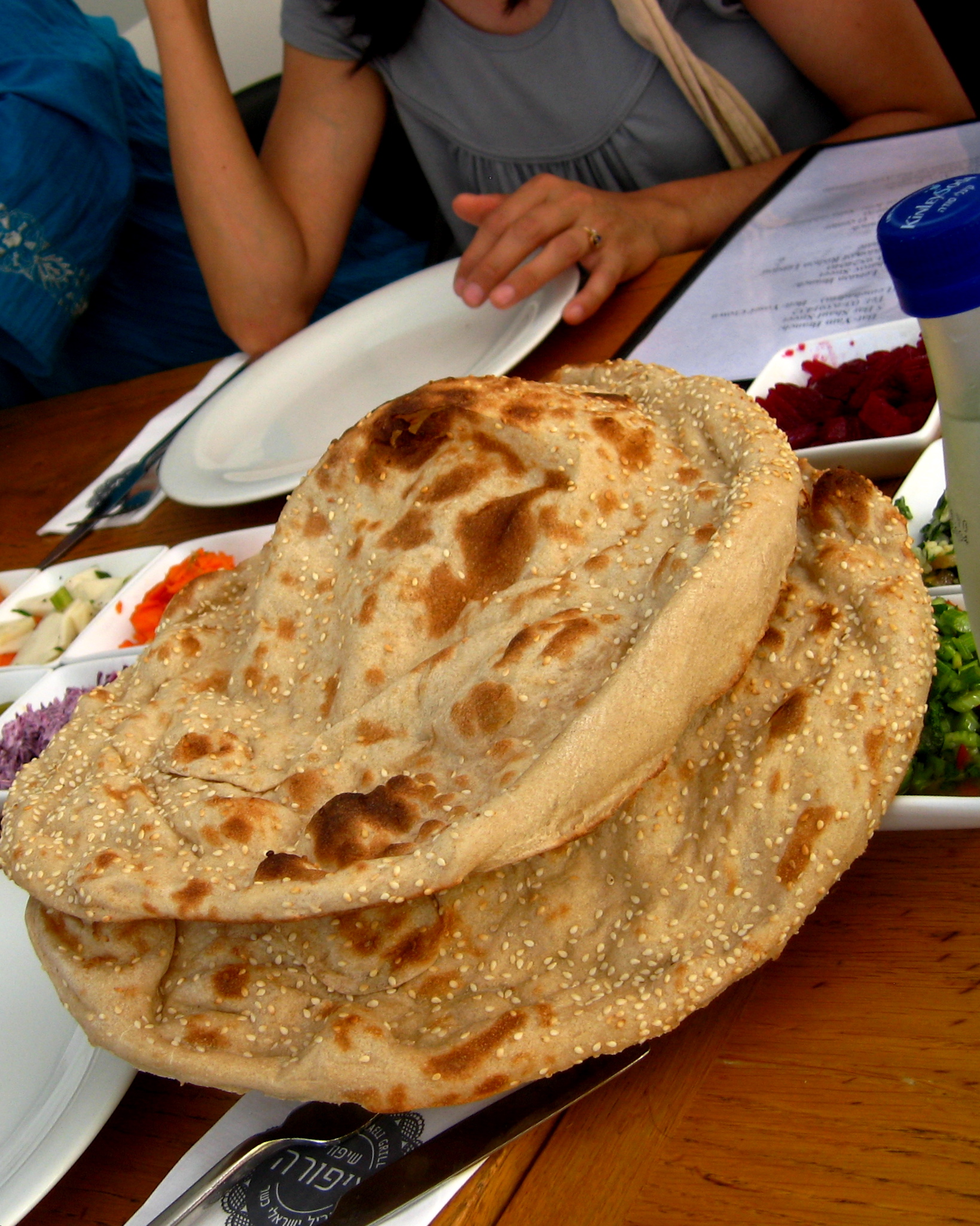
Bread for the Table (Tagami)
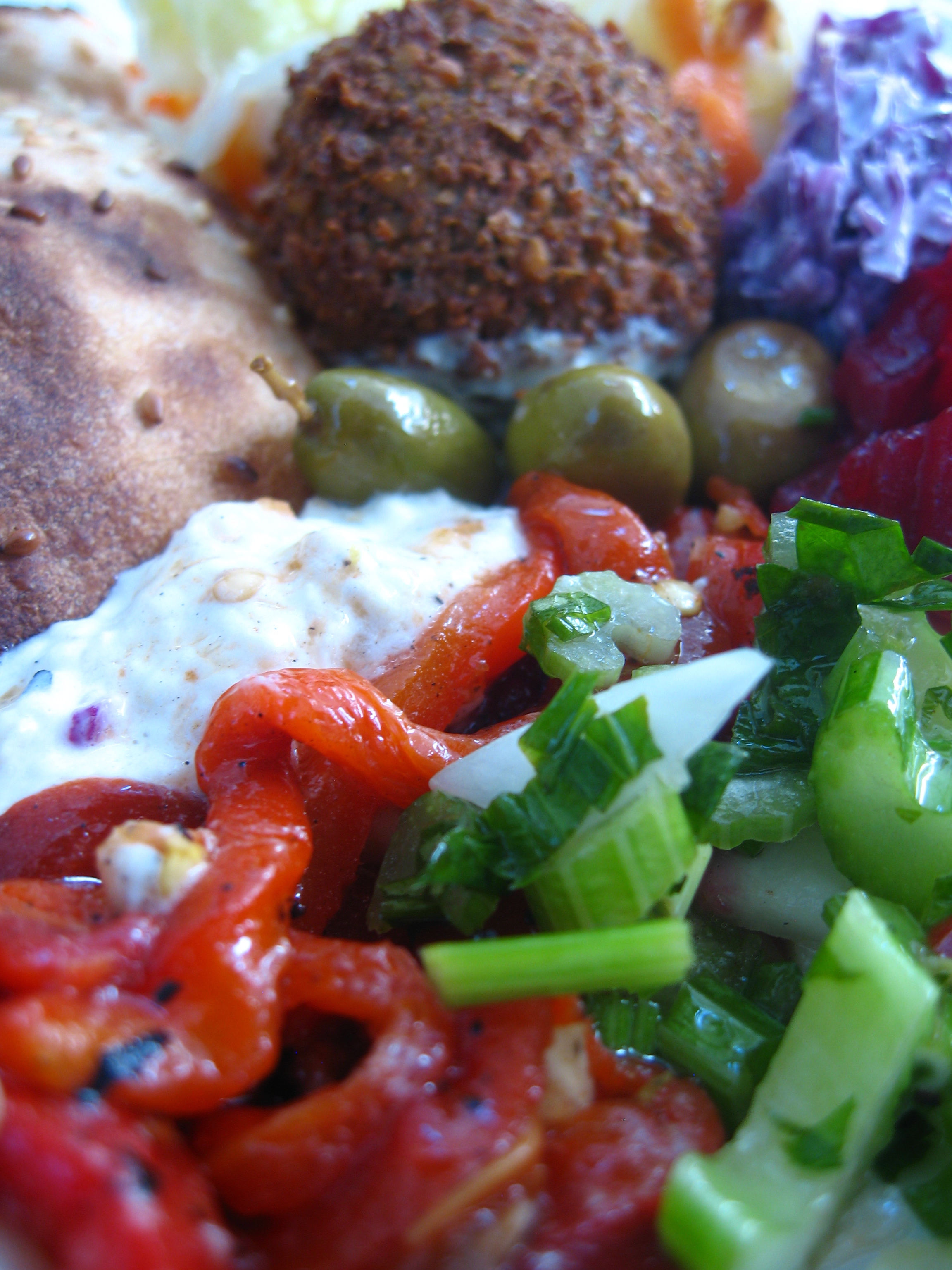
Lizzie’s Plate of Many Colors (Tagami)
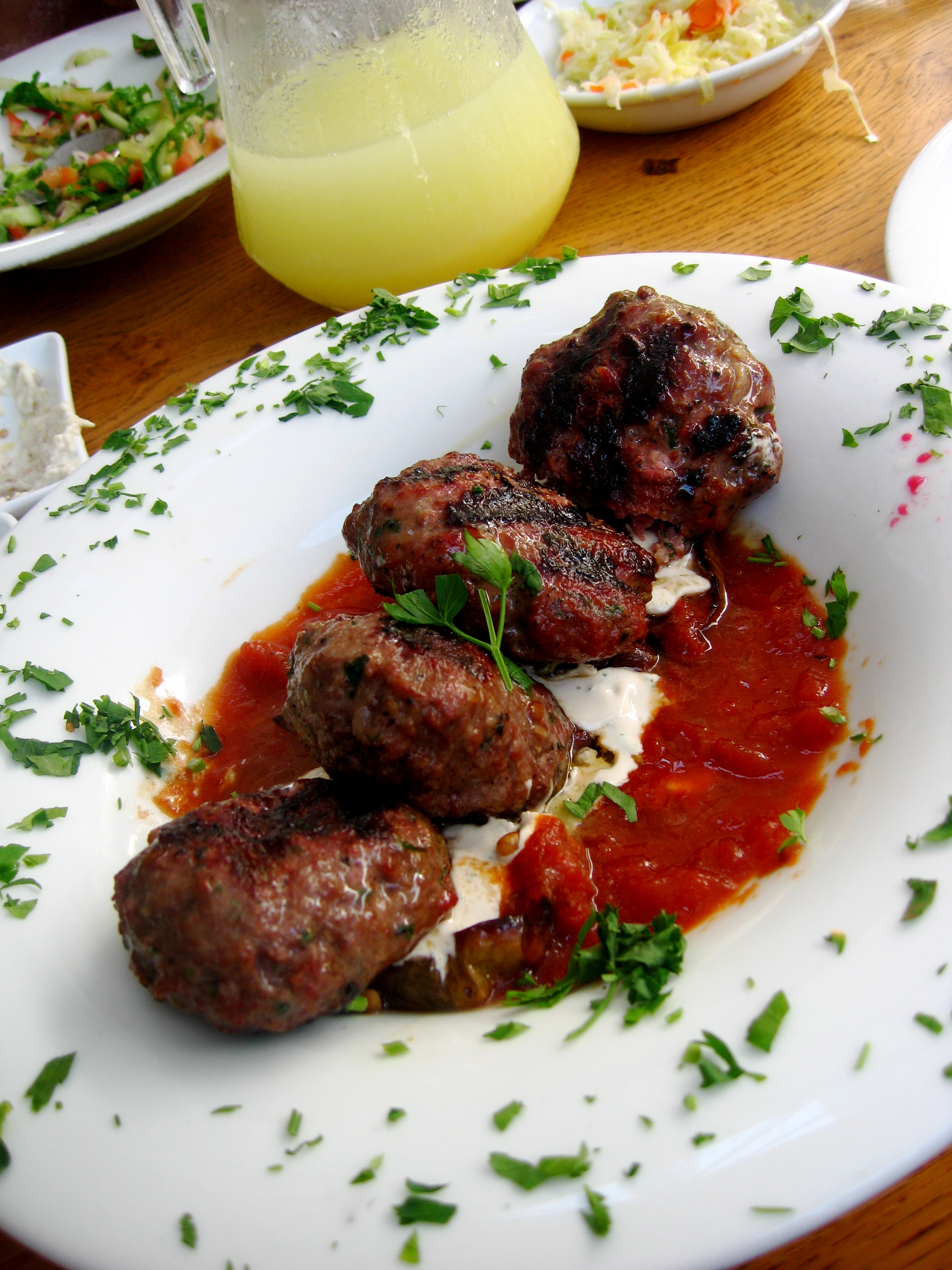
Grilled Lamb Kabobs (Tagami)
Shipudei Tzipora offers a lot of grilled meat — you can order steak or shwarma or have what many of us had, lamb kabobs. They were attractively plated and served conveniently off skewers, and they had a very satisfying crust from the grill with a moist and tender inside. Nothing was over-seasoned to my taste and the table was very quiet as we studiously relished our grilled meat.


Leave a Reply