
Olivaria – Spanish Olive Oil, part 1
On May 10, 2010 by Liz TagamiThe outbound Lufthansa flight from Tunisia departed at 2:30 am, and the route had us flying north to Frankfurt to catch a flight to our next destination south to Barcelona. It took seven hours to despite the fact that Barcelona is only 534 miles from Tunis! Fortunately, The 18th International Food and Beverages Exhibition, Alimentaria 2010, was conveniently scheduled to start on Monday, so I had a full day to transit, rest and get paperwork in order.
Nearly 4,000 companies exhibited in 14 pavilions during this trade fair and attracted 140,500 visitors from 75 countries.

140,500 trade visitors attended Alimentaria 2010 over four days.
Because each pavilion is so focused, the experience is really many shows within a larger show. Here’s an overview:
- Alimentación Ecológica/Vegefruit, Organic food fresh fruits, vegetables and produce
- Congelexpo, Frozen foods
- Expobebidas, Water, soft drinks, beer, must and cider
- Expoconser, Preserves and semi-preserves
- Intercarn, Meat and meat products
- Interlact, Milk and dairy products
- Interpesca, Fish and seafood, aquaculture and farmed fish products
- Intervin, Wine and spirits
- Mundidulce, Sweets, biscuits and confectionery
- Multiproducto, General food products
- Olivaria, Olive oil and vegetable oil
- Restaurama, International eating out
- Autonomous Communities Pavilion
- International Pavilion
In addition to cooking demos, which are always seen at trade shows, Alimentaria hosted lectures and conferences, including the 8th International Congress on the Mediterranean Diet. The Congress gathered specialists from around the world to discuss the latest studies.
The olive oil area was located in the back-third of building 8 on the far end of the fairgrounds, which are connected by a series of moving walkways. “Olivaria”, filled 6,000 square feet with both artisan and corporate producers.
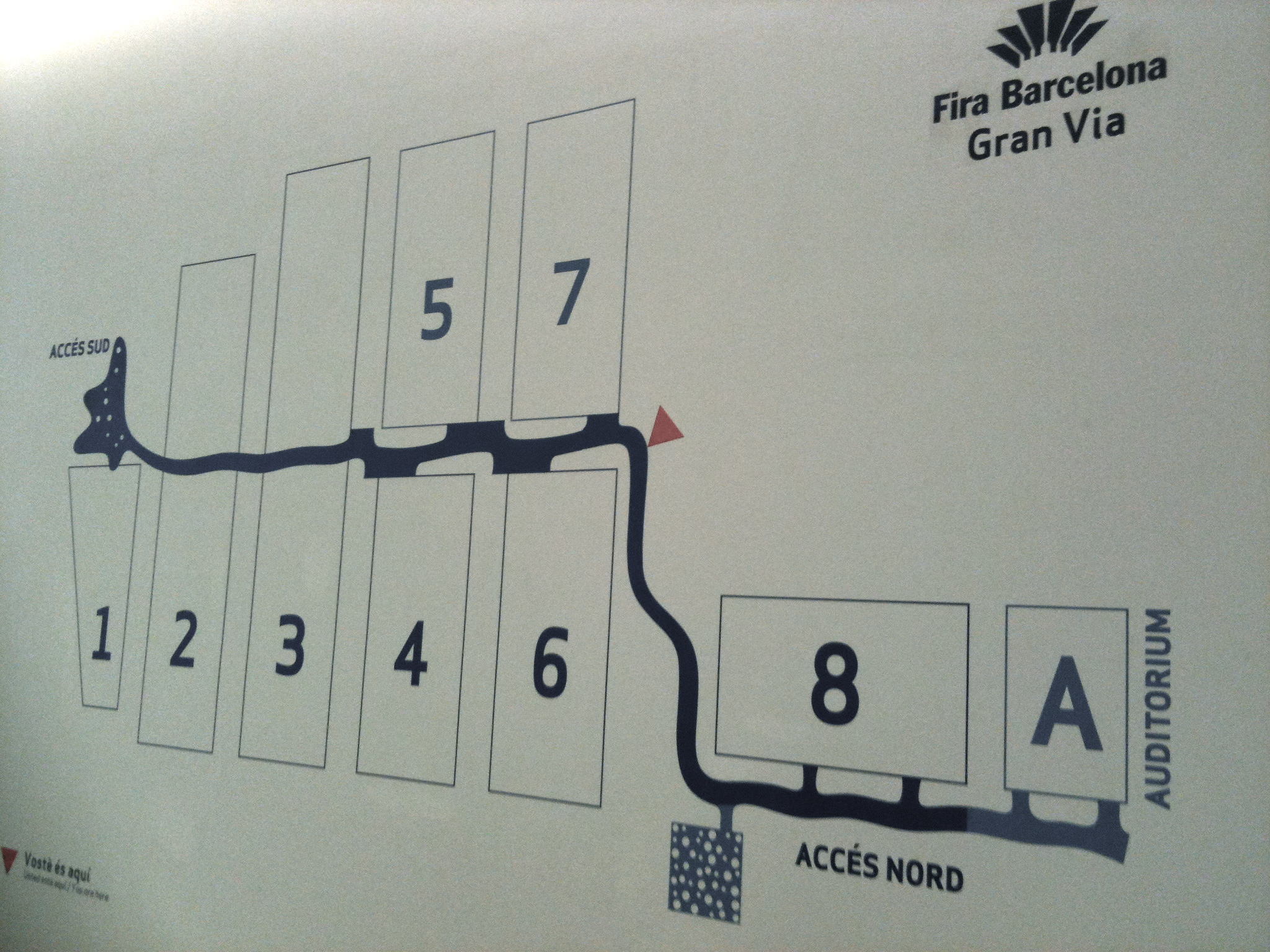
Hall Plan for Alimentaria 2010, follow the moving walkways between buildings! (Photo: Tagami)

Moving sidewalks quickly transport us throughout Alimentaria.
A highlight was having my friend John introduce me to four producers sharing a stand offering artisan EVOOs made of varietals we don’t typically see in the US market.
La Gaeta (Tarragona) had a 100% Empeltre DOP. Only one of two producers at this show with this varietal, I found it floral, spicy and about 1.5 coughs on the pungency scale.
At this same stand I also tasted my first Rojal (this one was blended with a little Arbequina), from an organic producer also from Tarragona called Cavaloca. This oil had fresh herb, artichoke and green almond aromas with a ripe olive and fresh herbal taste on the palate.
Clos de la Torre from Girona offered a very unique coupage of 50% argudell – a local olive from l’Empordà, 40% picual – an Andalusian varietal, and 10% frantoio from trees imported from Tuscany. This oil was grassy with a focused pepper finish.
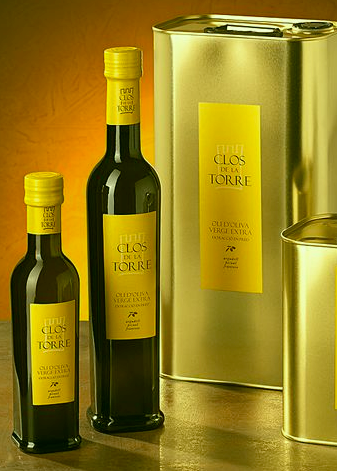
Clos de la Torre, EVOO.
The next producer was interesting to me because of the familiarity, not the uniqueness: Santa Oliva was 100% arbequina, which is a varietal that accounts for approximately 68% of the trees under cultivation in California today. Production methods between the two are different as California’s orchards are primarily super high density and irrigated, and these were conventionally spaced and dry farmed. Prized for its mild fruitiness and easy accessibility to consumers because of relatively low bitterness and pungency, I was delighted to try an artisan arbequina from Siurana made using traditional local methods, harvested just as olives are beginning to ripen and pressed within 24 hours. This oil is racked for 1 month before bottling, and was only off the tree five months earlier. It tasted of green tomato, apples and herbs, and was sweet and delicate, with little pungency or bitterness — the green tomato serving as the fruity forward edge to the overall sensory experience.
There are many hundreds of olive varieties under cultivation, and the Olive Oil Source is in the process of compiling a database. Before I leave the fairgrounds I will check out several more oils at the large tasting bar, which I will tell you about later.
After enjoying EVOOs from these four producers I walked among giant displays from global behemoths offering 3 and 5 liter tins or PET in container load quantities, for Spain is the #1 producer of olive oil in the world, and these fellows were out to move volume!
Around the next corner was Rosa Vañó of Castillo de Caneña, a family business since 1780. I first met Rosa at a Beyond Extra Virgin conference and have since grown to admire her marketing acumen. I’ll tell you about her singular approach to marketing olive oil in our next post. Olivaria – Spanish Olive Oil, part 2 Olive Juice and Other Ideas.


The difference in the olive varietels, by your description, is so seductive . . . I can assume that the knowledgable consummer, would probably use different oils for different dishes, and not stick to just one favorite oil.
Liz,
Another home run. Ever think of doing this for a living? ;- ) S.N.
great exhbition. nice review. thanks for sharing.
You’ve done it once again. Incredible read!