
Visit to Thuburbo Majus
On March 21, 2010 by Liz TagamiOn a cloudy day on the Ides of March a delegation of food journalists from Germany joined our US Trade Mission at the beginning of a five day visit to the olive growing regions of the Republic of Tunisia. We drove 30 minutes from Tunis to walk among the Roman ruins of Thuburbo Majus, which was originally a Punic town, situated within 40 miles of ancient Carthage. Our hosts organized this visit in order for us to appreciate the scale and manner in which the Ancients lived and to develop our understanding of the importance of olive oil in everyday life.
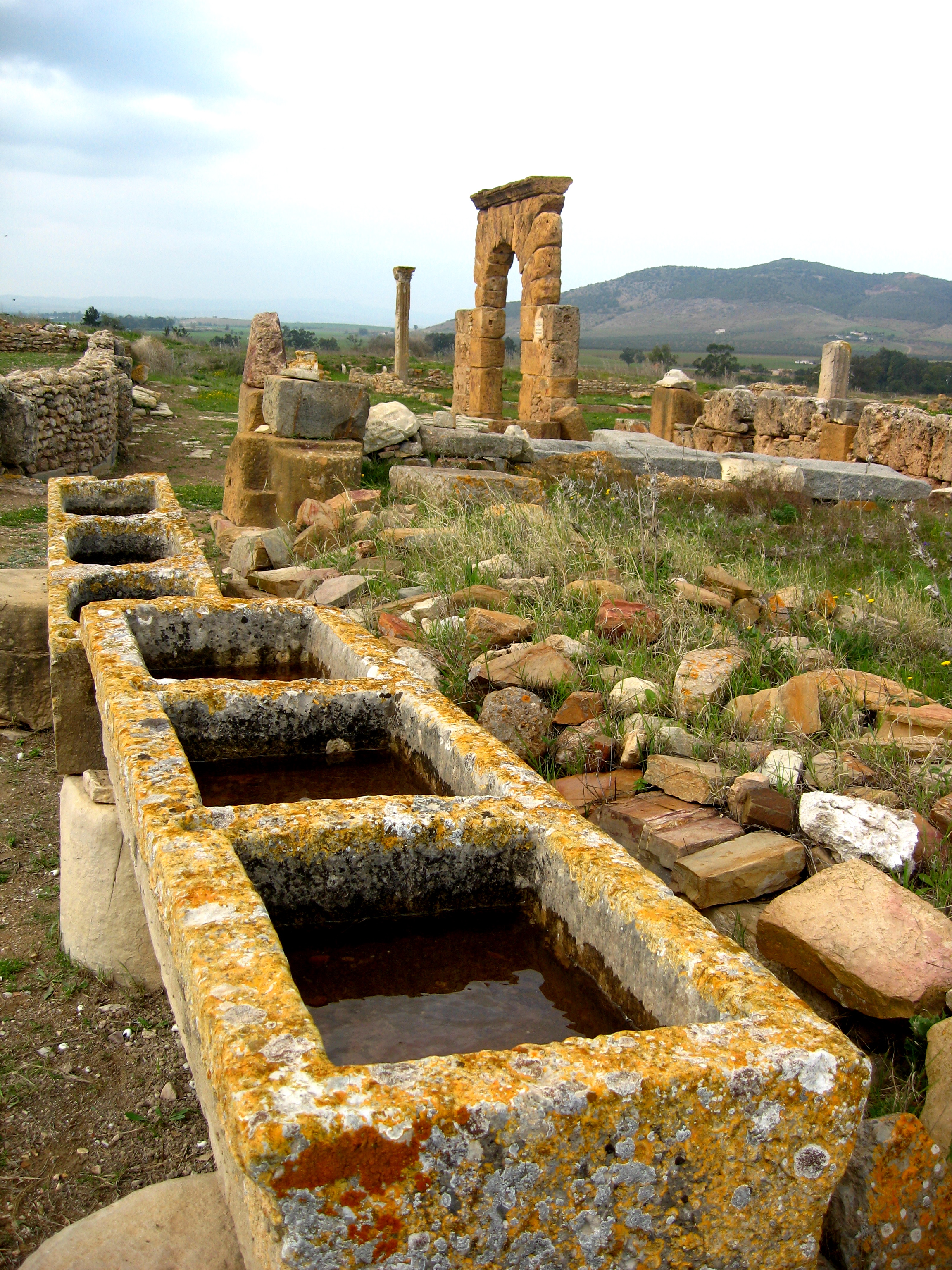
Troughs at Thuburbo Majus (Photo credit: Tagami)
The grandeur of the Capitol Temple with its steep imposing stairs rising from the forum, and the cleverness of the winter and summer baths on either end of the town were in stark contrast to the modest remains of the two simple olive presses we saw as we walked freely among the lichen covered stones with our colleagues and our guide. Seeing them was a poignant symbol of how much more alike than different we are from our cousins of 150 AD. Here is an image of the larger of the two mills in the foreground. We believe the there were probably wooden supports and a vertical screw which operated the press. The spout from which the fresh oil flowed is clearly visible to the left.
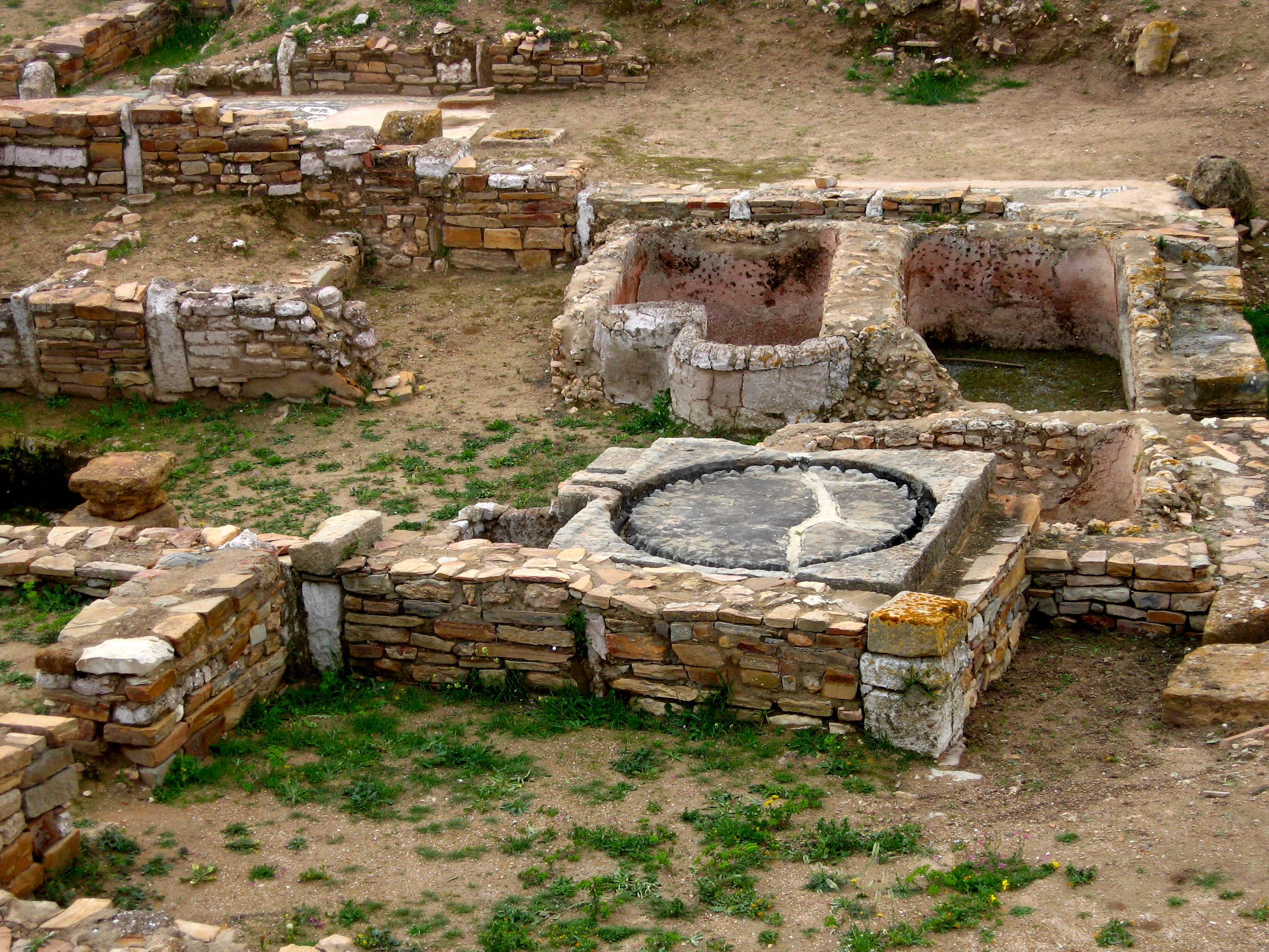
Olive Mill at Thuburbo Majus (Photo credit: Tagami)
There are over 56 million olive trees in Tunisia, an estimated three trees for every person. Twenty-two different cultivars have been identified, although Chemlali aka Chemléli comprises 60% of production and Chétoui 35%. Chemlali is a vigorous tree which is productive in the arid conditions and sandy soil of central Tunisia — in fact providing an effective barrier against encroachment by the Sahara Desert to the south. The fruit is small, but yields an impressive 30% when pressed for oil and is characterized by mild fruit aroma and flavor with green almond notes and very little bitterness or pungency. Chétoui olive trees require more water so are found to the north, closer to the Mediterranean Sea. The fruit is about twice the size of Chemlali, is asymmetrical in shape, and tends to be harvested earlier in the season. Chétoui olive oil is noted for a relatively higher phenolic content (>300 ppm) and it pleasantly grassy and bitter to the taste.
At the end of our morning tour of the ruins we headed back to our bus filled with thoughts of the Ancients and looked forward to our next stop, a biodynamic farm in the Jougar region.
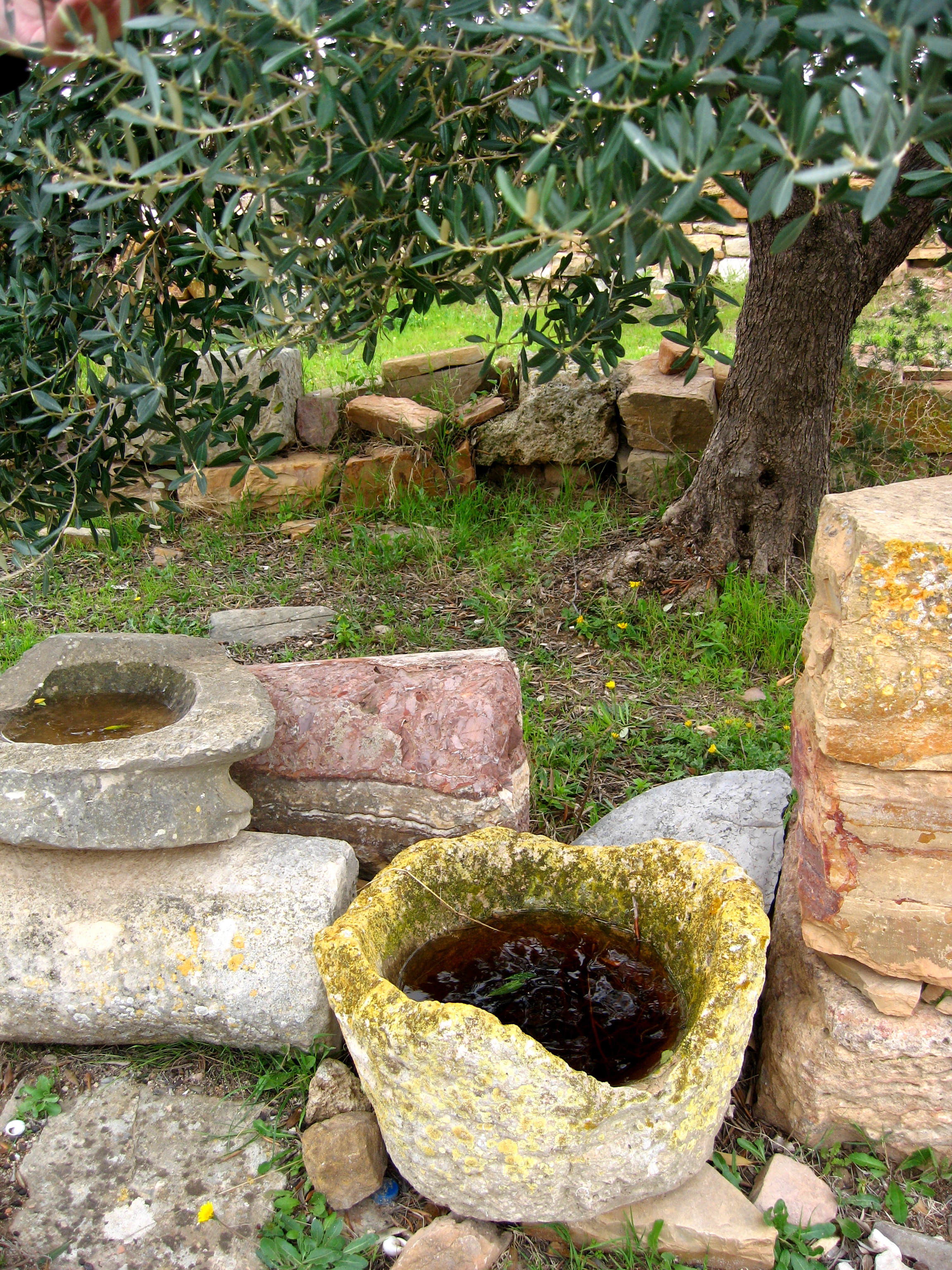
Olive Tree, possibly Chétoui, at Thuburbo Majus (Photo credit: Tagami)


I’m jealous! And it sounds like I prefer the Chetoui olives, so thank you for clarifying that! Hope you are enjoying, because I can tell you are edifying!
It was very nice to meet you in this Trade Mission Liz !
I hope to see you soon in Tunisia, you are welcome !